
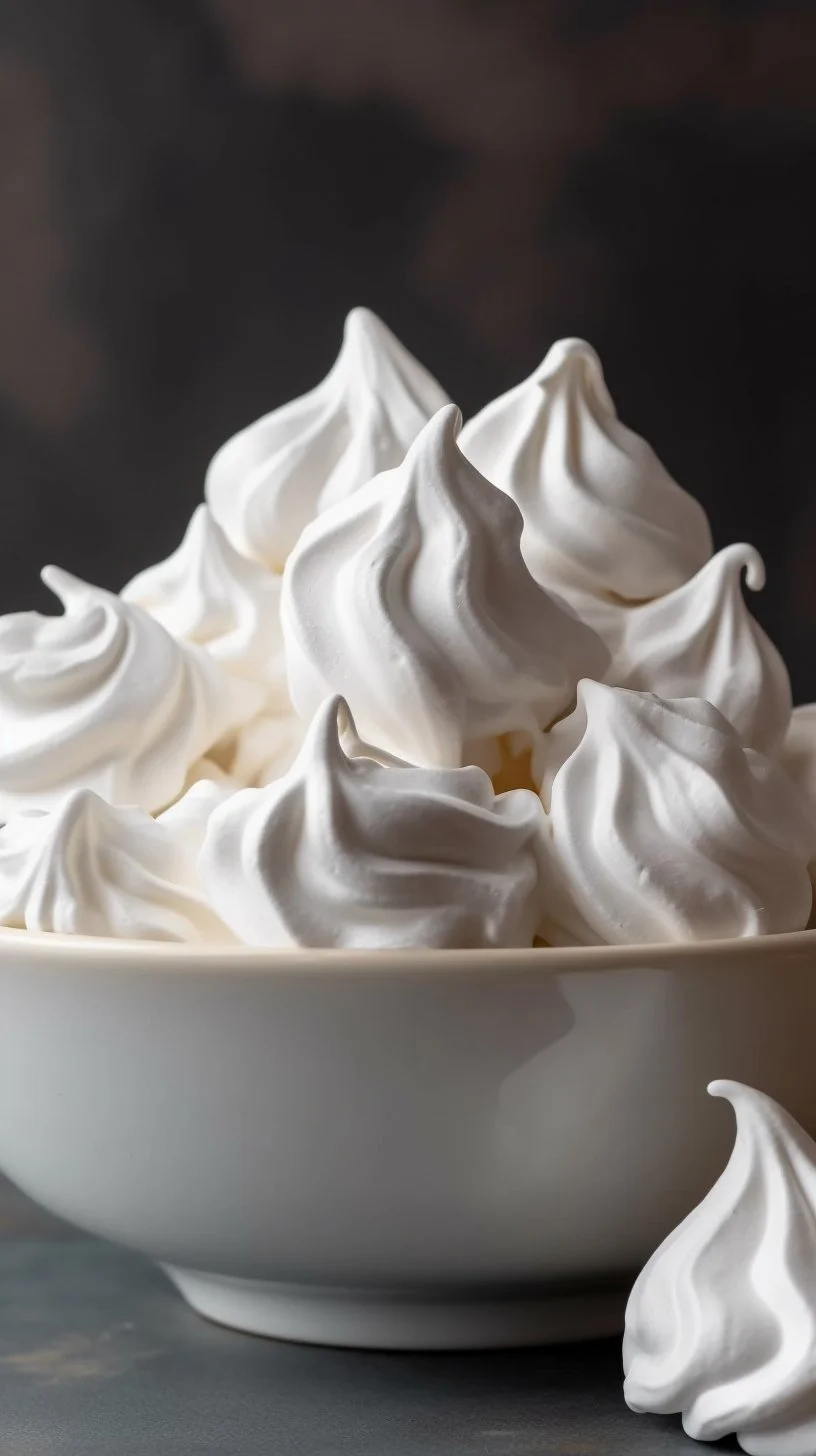
A pale chorus of sugar and air, coaxed into featherlight curls—the meringue is both quiet ritual and delicate triumph.
It crackles like thin porcelain against the tongue, dissolving into a whisper of sweetness and vanilla.
In the slow hush of a cooled oven, patience finishes what motion begins.
Why make this recipe
Meringue cookies ask for little and give much: minimal ingredients, maximal poetry. They are the kind of baking that teaches restraint—attention to temperature, to whisking, to the exact hush of a bowl cooling over water. Make them to celebrate simple ingredients elevated by technique, or to fill a jar with sunny, fragile treasures for unexpected guests.
How to make Meringue Cookies
Ingredients:
- 4 large egg whites
- 1 cup granulated sugar
- 1/4 teaspoon cream of tartar
- 1 pinch salt
- 1/2 teaspoon vanilla extract
Directions:
- In a heat proof mixing bowl, add the egg whites, granulated sugar, cream of tartar, and a pinch of salt. In a separate saucepan, bring a couple inches of water to a low boil. Place the mixing bowl over the boiling water and whisk until the sugar is completely dissolved.
- Add the vanilla to the egg white mixture. Transfer to a stand mixer and beat until stiff peaks form.
- Preheat the oven to 200 degrees F. Pipe swirls onto lined baking sheets. Bake for 1.5 hours, then turn off the oven, leaving the cookies inside for an additional hour. Allow to cool and store in an airtight container.
How to serve Meringue Cookies
Serve them simply: alongside a quiet cup of tea, or as a counterpoint to sharp citrus curd. For a more indulgent course, sandwich two meringues with a whisper of whipped cream or lemon curd—contrast the ethereal crunch with a bright, silky center. They also make charming edible garnishes for mousses and chilled desserts, lending texture without heaviness.
How to store Meringue Cookies
Keep meringues in an airtight container at room temperature, away from humidity and heat. Line the container with parchment to prevent sticking and stack layers gently. Properly stored, they remain crisp for up to two weeks; in humid climates they will soften faster, so plan to bake them the same day you intend to serve if moisture is high.
Tips to make Meringue Cookies
- Use a clean, grease-free bowl and utensils; any fat will prevent egg whites from reaching full volume.
- Room-temperature egg whites whip more readily than cold ones—let them sit at room temperature for 20–30 minutes.
- When warming the egg-sugar mixture over the simmering water, rub a bit between your fingers; if it feels smooth, the sugar has dissolved.
- Add the vanilla after the heating step to preserve its delicate aroma.
- Beat to stiff, glossy peaks—when you lift the whisk the peaks should stand straight without collapsing.
- Pipe on silpat or parchment for the cleanest release; if you aim for perfectly shaped swirls, chill the piping bag for a few minutes before use.
- Drying the cookies in the turned-off oven finishes them without browning—resist the urge to open the door until they are fully cool.
Variations (if any)
- Chocolate-dusted: fold 1–2 tablespoons of sifted cocoa into a small portion of meringue and pipe streaked swirls.
- Almond or citrus: substitute 1/4 teaspoon almond extract or a teaspoon of finely grated lemon zest for the vanilla.
- Meringue kisses: tint part of the mixture with gel color for a gentle palette of pastels.
- Chocolate-dipped: once cooled, dip the bottoms in melted dark chocolate and set on parchment to harden.
FAQs
Q: Why did my meringues weep or weep moisture after baking?
A: Weeping (or weeping with a glossy sheen) can happen if sugar has not fully dissolved before whipping, or if the oven temperature was uneven. Ensure sugar is dissolved in the warming step and allow the cookies to dry fully in the turned-off oven before removing.
Q: Can I use superfine or caster sugar instead of granulated?
A: Yes—caster or superfine sugar dissolves more readily and often produces a smoother, more stable meringue. If using granulated sugar, take care with the warming step until the grains vanish.
Q: My meringue won’t form stiff peaks. What went wrong?
A: Common causes are traces of yolk or grease in the bowl, under-whipping, or insufficient cooling before whipping if you used a warm bowl. Start with clean equipment, ensure egg whites are at room temperature, and whip until glossy, firm peaks form.
Q: Can I make meringues ahead of time?
A: Absolutely—store them in an airtight container at room temperature and bring them out when ready to serve. Avoid refrigeration, which invites moisture and softening.
Q: Is cream of tartar necessary?
A: It stabilizes the egg whites and helps maintain volume, but in a pinch a few drops of lemon juice can serve a similar role.
Conclusion
If you would like a step-by-step tutorial with photographs and additional piping ideas, consider the clear guide at Sugar Spun Run’s meringue cookie recipe, which complements the technique above. For more variations and troubleshooting tips that pair well with this gentle method, see the resources at Preppy Kitchen’s meringue cookies.
Baking meringues is a small lesson in patience: a slow alchemy of air and sugar that rewards quiet hands and time.
Meringue Cookies
Ingredients
Method
- In a heatproof mixing bowl, add the egg whites, granulated sugar, cream of tartar, and a pinch of salt.
- In a separate saucepan, bring a couple inches of water to a low boil.
- Place the mixing bowl over the boiling water and whisk until the sugar is completely dissolved.
- Add the vanilla to the egg white mixture and transfer to a stand mixer.
- Beat until stiff peaks form.
- Preheat the oven to 200 degrees F.
- Pipe swirls onto lined baking sheets.
- Bake for 1.5 hours, then turn off the oven, leaving the cookies inside for an additional hour.
- Allow to cool and store in an airtight container.