
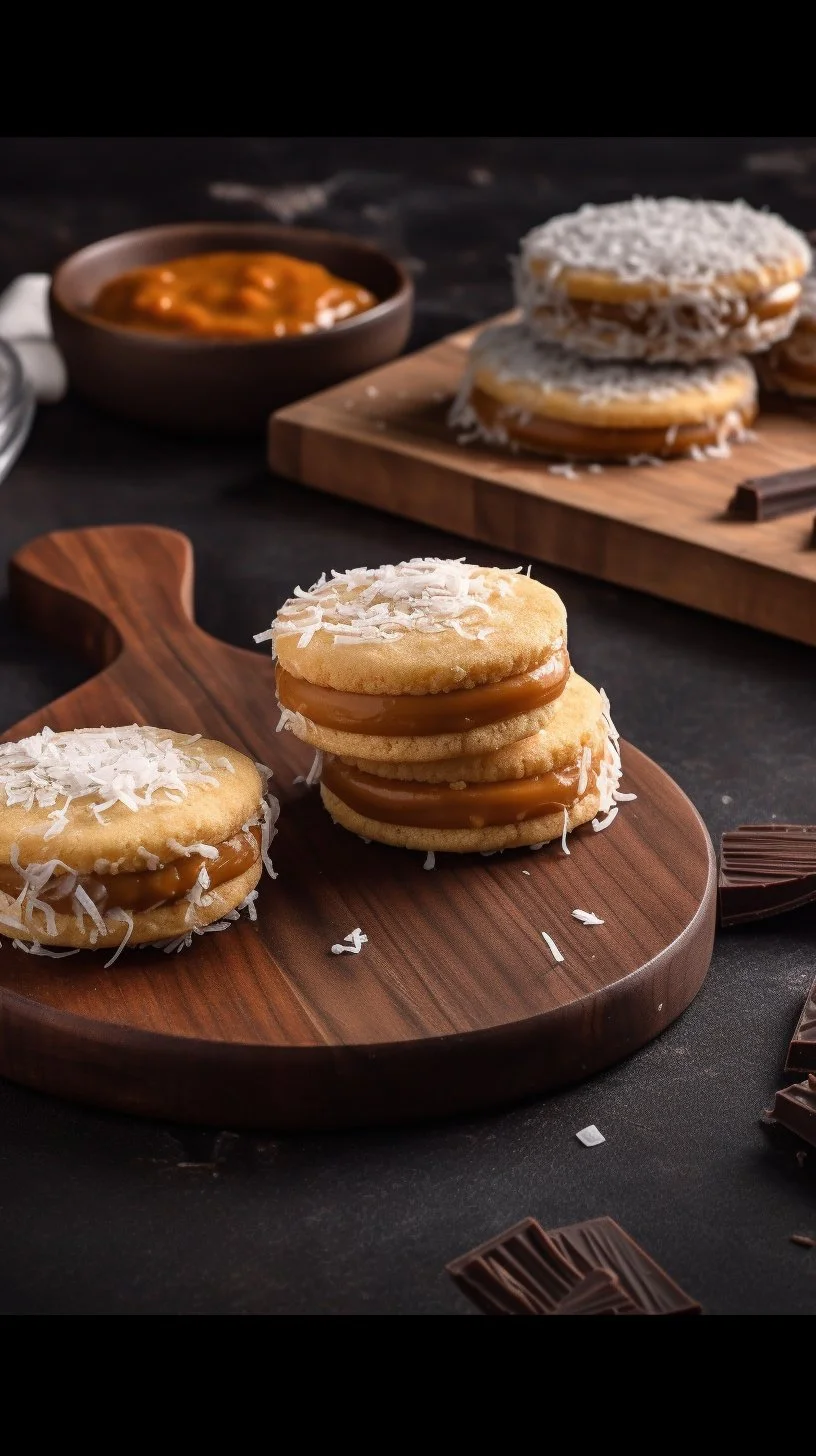
A warm wind from the southern cone, a cobbled street, a coffee cart — and a sandwich cookie so tender it feels like a postcard from Buenos Aires. These alfajores are short, pillowy, and full of caramel mischief.
Why make this recipe
Because you want a cookie that tastes like travel: buttery, melt-in-your-mouth disks hiding a glossy river of dulce de leche. They’re equal parts nostalgia and street-food swagger — perfect for a kitchen adventure or an impromptu soirée.
How to make Traditional Alfajores
Ingredients:
- 2 cup All-Purpose Flour
- 1/4 cup Cornstarch
- 1 cup Unsalted Butter
- 1/2 cup Powdered Sugar
- 2 Egg Yolks
- 1 teaspoon Vanilla Extract
- 1 teaspoon Lemon Zest
- 1/4 teaspoon Salt
- 1 cup Caramel
- 1/2 cup Shredded Coconut
Directions:
- Prepare dry ingredients. In a bowl, whisk together flour, cornstarch, and salt.
- Cream butter and sugar. In a large bowl, beat butter and powdered sugar until light and fluffy.
- Add wet ingredients. Beat in egg yolks, vanilla extract, and lemon zest until well combined.
- Combine dry and wet. Gradually add the flour mixture to the butter mixture, mixing until a soft dough forms.
- Chill dough. Wrap the dough in plastic wrap and refrigerate for at least 1 hour.
- Preheat oven. Preheat the oven to 350°F (175°C). Line baking sheets with parchment paper.
- Roll and cut dough. On a lightly floured surface, roll out the dough to 1/4 inch thickness. Cut into 2-inch rounds.
- Bake cookies. Place cookies on prepared baking sheets and bake for 10-12 minutes, until edges are lightly golden.
- Cool cookies. Remove from oven and let cool on the baking sheet for 5 minutes, then transfer to a wire rack to cool completely.
- Assemble alfajores. Spread a generous amount of dulce de leche on the flat side of one cookie and sandwich with another.
- Roll in coconut. Roll the edges of the sandwich cookies in shredded coconut, if desired.
- Serve. Arrange alfajores on a serving plate and enjoy.
How to serve Traditional Alfajores
Serve these like a secret: on a chipped enamel plate with a strong cortado or mate, or stacked in a picnic tin for a sunlit wander. They’re perfect with tea, coffee, or as a hand-held finale to a spicy meal — bite into one and watch the caramel glint like streetlight.
How to store Traditional Alfajores
Keep in an airtight container at room temperature for up to 3 days. For longer storage, refrigerate up to a week (bring to room temp before serving so the caramel softens). For freezing, flash-freeze assembled alfajores on a tray, then transfer to a freezer-safe container for up to 2 months.
Tips to make Traditional Alfajores
- Use real butter for the richest flavor; margarine kills the romance.
- Chill the dough well — it prevents spreading and keeps edges tender.
- If your dulce de leche is too firm, warm it gently in a microwave or double boiler for easier spreading.
- For uniform cookies, use a round cutter and transfer rounds with a thin spatula.
- Don’t overbake: look for just-blushed edges. The centers should stay pale and tender.
Variations (if any)
- Chocolate-dipped: Half-dip the sandwiches in melted dark chocolate for drama.
- Dust with powdered sugar instead of coconut for a snowy finish.
- Add a pinch of cinnamon or ground cardamom to the dough for a warm spice note.
- Swap shredded coconut for crushed toasted nuts if you want crunch.
FAQs
Q: Can I make the dough ahead of time?
A: Yes — dough can be refrigerated up to 48 hours or frozen for a month. Thaw in the fridge before rolling.
Q: What’s the difference between dulce de leche and caramel?
A: Dulce de leche is a slow-cooked milk caramel common in Latin America; you can use store-bought dulce de leche or a thick caramel. Use a thicker caramel for less runoff.
Q: My cookies came out crumbly. What went wrong?
A: Likely too much flour or not enough moisture/fat. Measure flour accurately (spoon and level), and don’t overwork the dough.
Q: Can I use whole eggs instead of yolks?
A: Yolks make the dough richer and more tender. Using whole eggs can alter texture and make the cookies slightly tougher; you can experiment but yolks are preferred.
Q: How do I prevent the coconut from getting soggy?
A: Roll the edges right before serving; if storing, add coconut just before presenting.
Conclusion
If you want to study the classic form, try the take on a beloved recipe at Classic Argentine Alfajores at El Mundo Eats, or compare cornstarch-forward styles with this Traditional Cornstarch Alfajores Recipe on Chilean Food and Garden for regional flavor riffs. Go forth — bake small rounds of joy and trade them like souvenirs on your next culinary street adventure.
Traditional Alfajores
Ingredients
Method
- In a bowl, whisk together flour, cornstarch, and salt.
- In a large bowl, beat butter and powdered sugar until light and fluffy.
- Beat in egg yolks, vanilla extract, and lemon zest until well combined.
- Gradually add the flour mixture to the butter mixture, mixing until a soft dough forms.
- Wrap the dough in plastic wrap and refrigerate for at least 1 hour.
- Preheat the oven to 350°F (175°C). Line baking sheets with parchment paper.
- On a lightly floured surface, roll out the dough to 1/4 inch thickness. Cut into 2-inch rounds.
- Place cookies on prepared baking sheets and bake for 10-12 minutes, until edges are lightly golden.
- Remove from oven and let cool on the baking sheet for 5 minutes, then transfer to a wire rack to cool completely.
- Spread a generous amount of dulce de leche on the flat side of one cookie and sandwich with another.
- Roll the edges of the sandwich cookies in shredded coconut, if desired.
- Arrange alfajores on a serving plate and enjoy with a strong cortado or mate.