
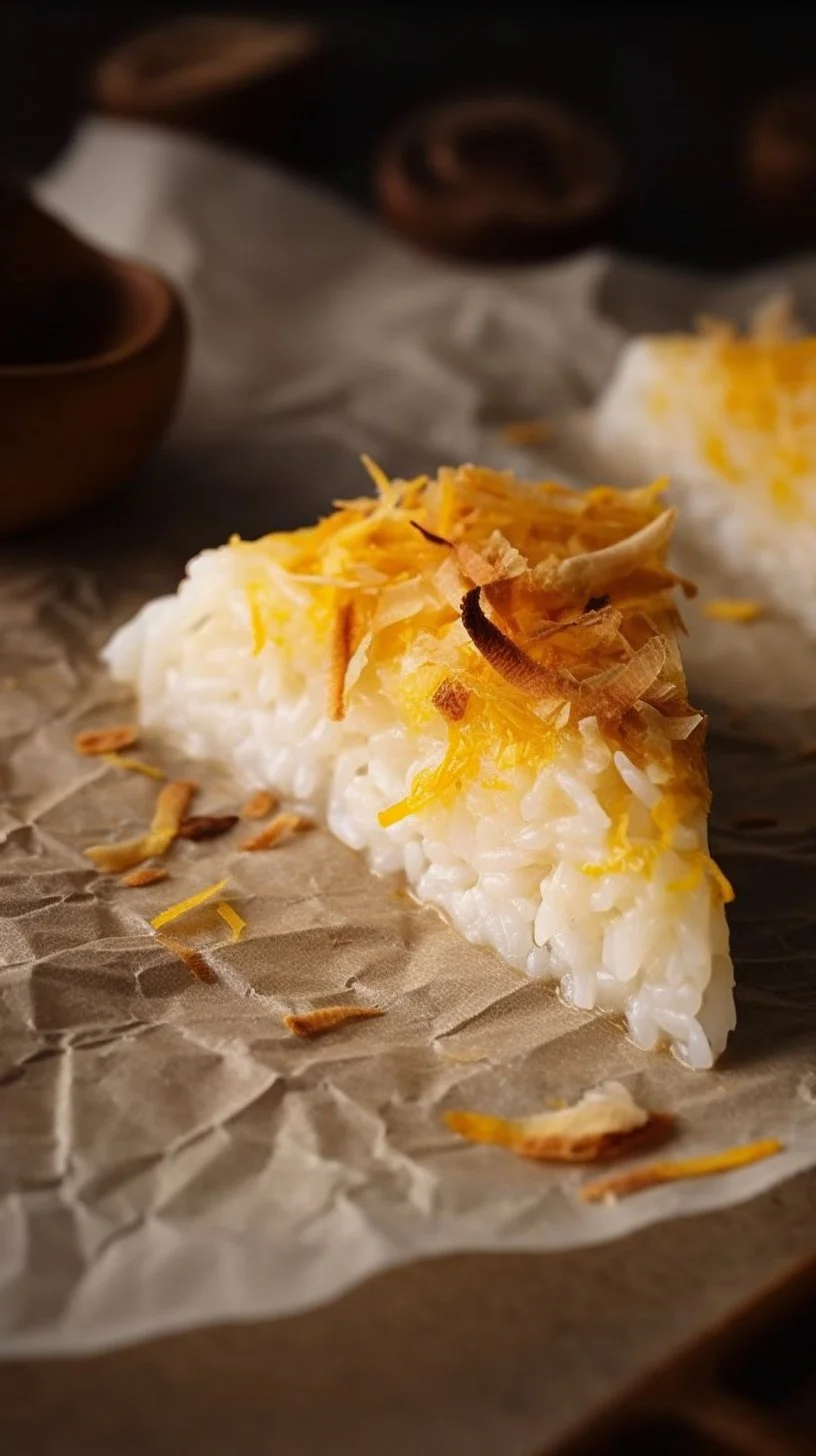
A humid night market breeze, the sizzle of coconut on iron plates, and a knife tapping out squares of caramelized comfort — Wingko Babat is the kind of street snack that smuggles you into another city with one bite. Sticky, sweet, and proudly unapologetic.
Why make this recipe
Because life needs a talisman made of coconut and sugar — a dessert that’s equal parts nostalgic, portable street food, and cinematic close-up. Wingko Babat (Sticky Coconut Cake) is simple enough for a weekday kitchen heist and bold enough to steal any gathering. If you love toasted coconut, custardy sheen, and bites that cling to memory, this is your passport.
How to make Sticky Coconut Cake Babat Wingko
Imagine a seaside stall where a vendor presses warm batter into pans and broils the tops until they sing. This is that texture: glossy, dense, and just sticky enough to slow your chewing — a cake that tastes like tropical rain and makes your spoon pause politely.
Ingredients:
- 2 eggs separated
- 1 1/4 cup granulated sugar
- 2 1/4 cup full fat canned coconut milk
- 3 cups shredded sweetened coconut
- 1 1/2 cup glutinous rice flour
- 1 teaspoon vanilla extract
Directions:
Preheat oven to, 350 F. Whisk the egg whites and the sugar together in a medium bowl. Slowly mix in the coconut milk, shredded coconut, rice flour, and vanilla. Make sure that all the ingredients are well combined and that there are no lumps of coconut. The batter will be thin and liquidy. Pour the batter into an 8×8 inch baking pan and bake it in the preheated oven for 45 minutes. Carefully take out the pan and brush the egg yolks on top of the cake. Set the oven to broil and broil the cake for 5-10 minutes. Keep a close eye on it, as it will brown quickly, and take it out when it turns golden brown. Set the cake in the pan on a wire rack to cool completely to room temperature. Then, place the cake in the pan, covered with plastic wrap, in the fridge overnight or for 8 hours before cutting and serving, to ensure that the cake has set. Cut cake into squares or triangles, and serve cold from the fridge or at room temperature.
How to serve Sticky Coconut Cake Babat Wingko
Serve chilled or at room temperature — each yields a different vibe. Cold gives a firmer, almost fudge-like chew; room temp is gooey and satin-smooth. Plate with a sprinkle of toasted coconut, a tiny pinch of flaky sea salt, or alongside strong black coffee or cardamom tea to cut through the sweetness. For street-food drama, wrap a square in parchment and hand it over like a warm, tropical coin.
How to store Sticky Coconut Cake Babat Wingko
Keep it refrigerated, tightly wrapped in plastic or in an airtight container. It lasts up to 5 days chilled and holds texture beautifully. You can freeze squares in single layers separated by parchment for up to 1 month — thaw in the fridge before serving.
Tips to make Sticky Coconut Cake Babat Wingko
- Whisk the egg whites until glossy: that initial aeration helps create a lighter lift before the dense coconut and rice flour take over.
- Don’t skip the overnight chill: the fridge sets the cake and sharpens the flavors.
- Watch the broil like a hawk: coconut browns fast — you want golden, not charred.
- Use full-fat canned coconut milk for richness; watery versions dilute the signature sheen.
- If your shredded coconut is dry, briefly toast it for more depth — but let it cool before stirring in.
Variations (if any)
- Pandan Wingko: stir in 1–2 teaspoons pandan extract or a few drops of green food coloring and a hint of pandan water for a fragrant, emerald version.
- Chocolate-kissed: fold in 1/4 cup finely chopped dark chocolate for streaks of bitterness.
- Nutty texture: sprinkle chopped roasted peanuts or cashews on top before broiling for a crunchy street-food twist.
FAQs
Q: Can I make this gluten-free?
A: Yes — the recipe already relies on glutinous rice flour (which is gluten-free despite the name). Ensure your shredded coconut and other ingredients are certified gluten-free if you have sensitivities.
Q: My batter seemed too thin — is that wrong?
A: The batter should be thin and liquidy. The structure comes from the coconut and the rice flour during baking. Thin batter is expected.
Q: Do I have to chill it overnight?
A: For best texture and clean slicing, yes — chilling for 8 hours or overnight firms the cake and enhances the sticky, fudgy mouthfeel. You can serve it sooner, but expect a softer, looser cake.
Q: Can I use unsweetened coconut instead of sweetened?
A: You can, but you’ll lose some sweetness. Compensate with a tablespoon or two more sugar to taste.
Q: How do I prevent the top from burning while broiling?
A: Keep the oven rack a little lower, and broil in short bursts with constant checking. Brush evenly with egg yolk to encourage golden browning rather than fast blackening.
Conclusion
If you want a deeper dive into the history and variations of this street-side marvel, this piece on Sticky Coconut Cake (Wingko Babat) – Life Currents is a lovely companion read. For a warm, family-led memory lane and another home-kitchen take, check out My Grandmother’s Plakkoek / Wingko (Indonesian Sticky Coconut …).
Go bake it, wrap a slice in your palm, and let the coconut steam write a travelogue across your taste buds.
Sticky Coconut Cake
Ingredients
Method
- Preheat oven to 350°F (175°C).
- In a medium bowl, whisk the egg whites with the granulated sugar until combined.
- Slowly mix in the coconut milk, shredded coconut, rice flour, and vanilla until well combined and smooth.
- Pour the batter into an 8x8 inch baking pan and bake for 45 minutes.
- After baking, brush the egg yolks on top of the cake.
- Set the oven to broil and broil the cake for 5-10 minutes, monitoring closely until golden brown.
- Remove the cake from the oven and let it cool completely in the pan on a wire rack.
- Cover the cake with plastic wrap and refrigerate for at least 8 hours or overnight before serving.
- Cut the chilled cake into squares or triangles and serve cold or at room temperature.
- For added flavor, plate with toasted coconut and a pinch of flaky sea salt.