
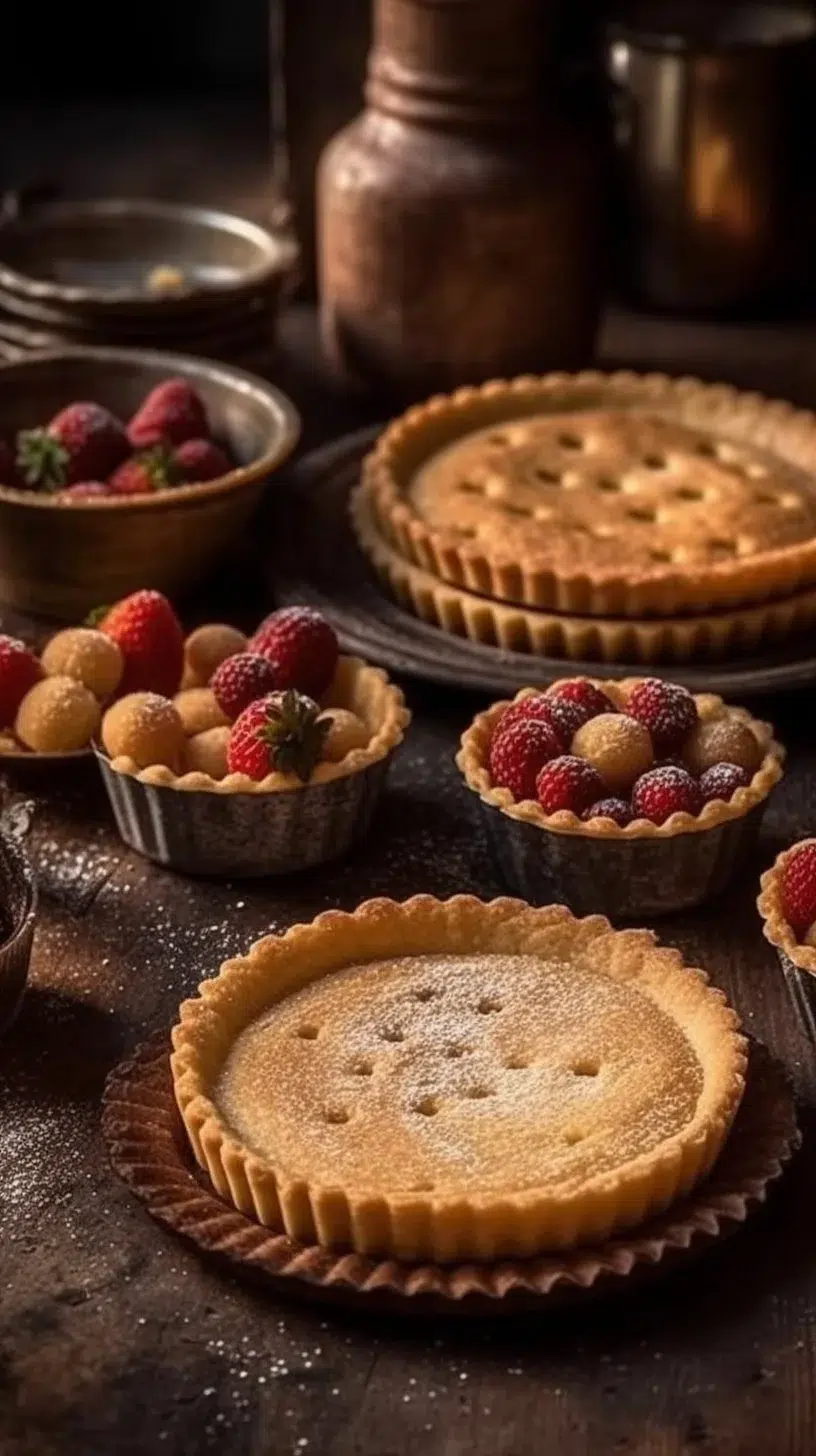
A hush of butter and sugar: the scent of cold butter, the whisper of flour, the first sigh as fingertips turn ingredients into something sandy and alive. This is a small, exact pleasure—delicate, clean, and quietly luxurious. Bake it once and you carry the memory of a perfect crumb.
Why make this recipe
Because a classic French sablé is the foundation of restrained elegance in the pastry kitchen: crisp-edged yet tender, subtly sweet, and infinitely adaptable. It teaches restraint—cold butter, gentle handling—and rewards you with a texture that melts, a base that frames fruit and cream, and cookies that dissolve into buttery flakes.
How to make Sable Dough (Classic French Sablé)
Ingredients:
- 250 g all-purpose flour
- 125 g cold butter, cut into cubes
- 100 g icing sugar
- 1 medium egg
- 1 pinch of salt
- Optional: 1 teaspoon vanilla extract or lemon zest
Directions:
- Sand the mixture: Add flour, icing sugar, and salt to a bowl. Add the cold butter cubes and rub with your fingertips (or pulse in a food processor) until the mixture looks like damp sand. Do not form a dough yet.
- Add the egg: Add the egg (and vanilla or lemon zest if using). Mix just until the dough comes together. Do not knead overworking will make it hard.
- Rest the dough: Shape into a flat disc, wrap in plastic wrap, and refrigerate for at least 1 hour (2 hours is best) to prevent shrinking during baking.
- Roll and line: Lightly flour your work surface. Roll the dough to 3–4 mm thickness. Line your tart pan and prick the base with a fork.
- Bake: For blind baking, bake at 175 degrees C for 12–15 minutes with weights. Remove weights and bake for 5 more minutes until lightly golden. For cookies or fully baked tart shells, bake at 170–175 degrees C for 12–18 minutes until the edges turn pale golden.
Pro Tips: Do not overmix. Sablée should stay tender, not tough. If the dough cracks while lining the pan, patch it gently instead of re-rolling. For a richer version, replace 50 g flour with 50 g ground almonds.
How to serve Sable Dough (Classic French Sablé)
Serve simply to honor its texture: a thin smear of pastry cream and fresh berries, a glossy citrus curd, or a scattering of crushed pistachios and a dusting of icing sugar. For cookies, present them alongside tea or coffee so their delicate fragrance can be noticed between sips.
How to store Sable Dough (Classic French Sablé)
Keep baked shells or cookies in an airtight tin at room temperature for up to 4–5 days. For longer storage, freeze the unbaked disc wrapped tightly in plastic for up to one month; thaw in the refrigerator before rolling. Once filled, tarts are best eaten within 24 hours to preserve crispness.
Tips to make Sable Dough (Classic French Sablé)
- Keep ingredients cold: it’s the cold butter that gives the dough its sandy texture and tender snap.
- Work quickly and gently: hands warm the butter; a food processor saves time and heat.
- Rest well: chilling relaxes the gluten and prevents shrinkage during baking.
- Patch, don’t re-roll: overworking repairs will toughen the pastry; gentle mending preserves the crumb.
- For richer aroma, add a teaspoon of vanilla or a strip of lemon zest with the egg.
Variations
- Almond Sablé: Replace 50 g of the flour with 50 g ground almonds for a more moist, nutty crumb.
- Cocoa Sablé: Substitute 15–20 g of flour with unsweetened cocoa powder for a chocolate note.
- Citrus sugar: toss the icing sugar with finely grated orange or lemon zest before combining for a fragrant lift.
- Brown-butter sablé: brown the butter, chill it solid, and then use it for a deeper, toasty flavor (note: this will soften handling, so work cold and rest longer).
FAQs
Q: What is the difference between sablé and pâte sablée?
A: Names blur in pastry language, but sablé refers to the sandy texture and the cookie-like result; pâte sablée is the sweet tart dough version. Both are tender and buttery, distinguished by thickness and intended use.
Q: Can I make this dough in a food processor?
A: Yes. Pulse the dry ingredients with cold butter until crumbly, then pulse in the egg until the mixture just comes together. This minimizes hand heat and keeps the butter cold.
Q: Why did my tart shrink during baking?
A: Shrinkage happens when the dough hasn’t rested long enough or was overworked. Always chill the disk for at least one hour, and avoid stretching the pastry into the pan while lining it.
Q: Can I substitute butter with margarine or a plant-based alternative?
A: You can, but the flavor and the melt behavior will differ. Use a high-fat plant butter designed for baking and keep it very cold; expect slight changes in texture and aroma.
Q: How do I prevent a soggy tart base when filling with wet fillings?
A: Blind bake fully until the base is lightly golden, and consider a thin glaze of melted chocolate or a quick brush of apricot jam to seal the surface before adding wet fillings.
Conclusion
For a deeper technique guide and an alternative approach to sandy tart dough, the Pâte Sablée (Sandy Tart Dough) recipe at Serious Eats offers tested steps and helpful photos. If you want a companion tutorial focused on classic sweet tart pastry, this How to Make Pâte Sablée (Classic Sweet Tart Pastry) guide gives practical insights and variations.
There is a quiet pleasure in the patience of pastry: the restraint, the chill, the slow reward of a perfect, fleeting crumb.
Sable Dough (Classic French Sablé)
Ingredients
Method
- In a bowl, add flour, icing sugar, and salt.
- Add cold butter cubes and rub with fingertips until the mixture resembles damp sand.
- Add the egg (and any optional flavoring) and mix until the dough just comes together. Do not knead.
- Shape the dough into a flat disc, wrap in plastic wrap, and refrigerate for at least 1 hour (preferably 2 hours).
- Lightly flour your work surface and roll the dough to about 3–4 mm thick.
- Line a tart pan with the rolled dough and prick the base with a fork.
- For blind baking, preheat the oven to 175°C and bake for 12–15 minutes with weights. Remove weights and bake for an additional 5 minutes until lightly golden.