
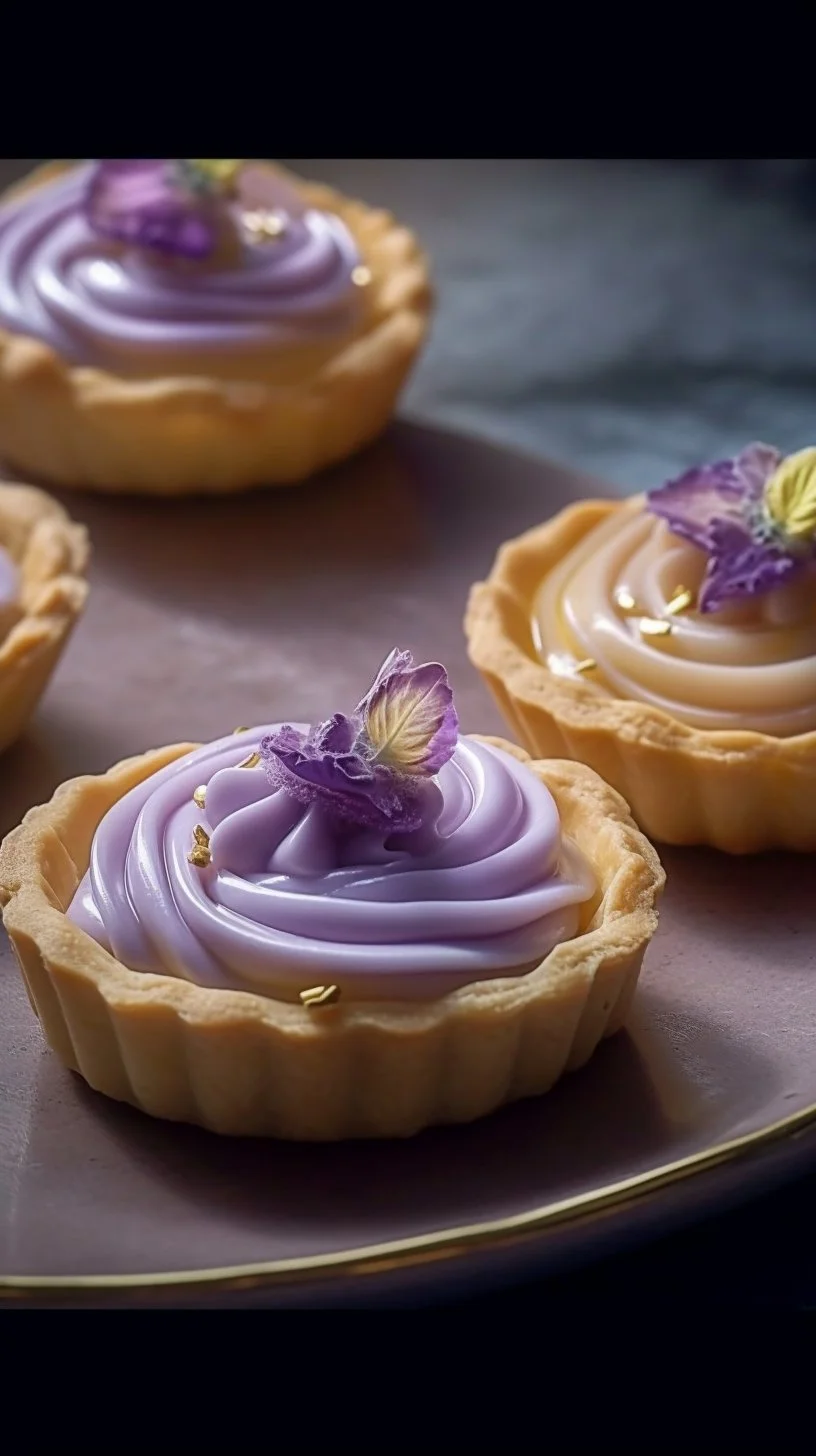
A thin wash of sunlight on a pastry board, the scent of lemon oil rising like a small promise—this is a spring bite that hums gently on the tongue. Crisp, buttery shell; tart, sunlit curd; and a cloud of lilac-tinted meringue toasted to honeyed tips. Each component sings, and together they make a quiet celebration.
Why make this recipe
This mini lemon tart is a study in contrasts: the crumbly, chilled pâte sucrée against a warm, velvety lemon curd and a delicate, floral meringue. It’s compact, elegant, and perfect for sharing—ideal when you want a dessert that looks effortless but tastes like care. Make it for a garden tea, an intimate dinner, or a morning when small rituals feel necessary.
How to make Mini Lemon Tart with Lilac Meringue: Spring Dessert
Ingredients:
- 1 1/4 cups all-purpose flour
- 1/4 cup powdered sugar
- 1/2 cup unsalted butter, cold and cubed
- 1 large egg yolk
- 1–2 tbsp cold water
- 1/2 cup fresh lemon juice (about 2 lemons)
- 1 tbsp lemon zest
- 3/4 cup granulated sugar
- 3 large eggs
- 6 tbsp unsalted butter, cubed
- 3 large egg whites
- 3/4 cup granulated sugar
- 1/4 tsp cream of tartar
- 1/2 tsp vanilla extract
- A few drops of violet food coloring or a mix of red and blue
- Optional: edible lilac flowers for garnish
Directions:
-
Pulse the crust: In a food processor, pulse the flour and powdered sugar until combined. Add the cold, cubed butter and pulse until the mixture resembles coarse crumbs. Add the egg yolk and 1 tablespoon of cold water, pulsing until the dough just comes together; add the extra tablespoon only if needed. Wrap the dough and chill for 30 minutes to firm the butter and let the flavors settle.
-
Blind-bake the shells: Preheat the oven to 350°F (175°C). Roll out the chilled dough and press gently into mini tart pans, keeping a slightly thicker rim for structure. Prick the base with a fork, line with parchment, and fill with pie weights or dried beans. Bake for 10–12 minutes until the edges are a pale gold and the bases feel set. Remove weights and parchment, then let the tart shells cool completely on a rack.
-
Make the curd: In a saucepan, whisk together the fresh lemon juice, lemon zest, 3/4 cup granulated sugar, and the 3 large eggs until smooth. Cook over medium heat, stirring constantly and scraping the pan’s surface, until the curd thickens and coats the back of a spoon—about 8–10 minutes. Remove from heat and whisk in the 6 tablespoons of cubed butter until silkily combined. Let the curd cool slightly before spooning it into the cooled tart shells. Chill for 1 hour to set the curd fully.
-
Prepare the lilac meringue: Place a heatproof bowl over a saucepan of gently simmering water. Whisk together the 3 large egg whites, 3/4 cup granulated sugar, and 1/4 teaspoon cream of tartar until warm to the touch and the sugar dissolves. Remove the bowl from the heat and beat with an electric mixer until glossy, stiff peaks form (about 5–7 minutes). Fold in the 1/2 teaspoon vanilla and a few drops of violet food coloring, adjusting to a soft lilac hue.
-
Finish and toast: Pipe the lilac meringue onto the chilled lemon tarts using a star tip for a sculpted crown. Use a small kitchen torch to gently toast the meringue tips until they take on a faint amber. Garnish with a few edible lilac petals or a light sprinkle of dried lavender to emphasize the floral note.
How to serve Mini Lemon Tart with Lilac Meringue: Spring Dessert
Serve these tarts slightly chilled so the curd holds its shape and the meringue yields with a tender crack. Present them on a simple white plate or a wooden board to highlight their pale colors. They pair beautifully with a cup of light tea—earl grey or a floral green—or a glass of sparkling wine to balance the tartness.
How to store Mini Lemon Tart with Lilac Meringue: Spring Dessert
These tarts are best eaten within 24 hours for optimal texture. Store in an airtight container in the refrigerator; the meringue will soften slightly over time. If you need to prepare components ahead, keep the tart shells and curd chilled separately, and pipe the meringue just before serving.
Tips to make Mini Lemon Tart with Lilac Meringue: Spring Dessert
- Keep ingredients cold for a flakier crust: chill the butter and handle the dough minimally.
- Stir the curd constantly and scrape the pan to avoid curdling; a double-boiler method gives extra control.
- For a silkier curd, pass it through a fine sieve before filling shells to remove any coagulated bits.
- When making the meringue, ensure no fat contaminates the whites—use a clean, dry bowl and beaters.
- Torch gently: move the flame constantly to avoid burning; aim for small, golden highlights.
Variations (if any)
- Lemon-rose: add a drop of rose water to the curd (very sparingly) and top with crystallized rose petals.
- Honey-mint: swap a tablespoon of granulated sugar in the curd for honey and decorate with chopped mint.
- Berry jewel: spoon a thin layer of mixed berry jam on the cooled shell before adding the curd for a fruity underpinning.
FAQs
Q: Can I make the tart shells ahead of time?
A: Yes. Blind-baked tart shells can be stored in an airtight container at room temperature for up to 2 days. Fill and finish with meringue on the day you serve.
Q: What if my curd separates or looks grainy?
A: Remove it from heat immediately and whisk vigorously; if it’s still grainy, strain it through a fine-mesh sieve. To prevent separation, keep the heat moderate and stir continuously.
Q: Can I use a different meringue method (Swiss or Italian)?
A: Absolutely. The recipe uses a warm-whisk method (similar to Swiss meringue). Italian meringue—where hot sugar syrup is poured into whipped whites—gives extra stability and sheen and is excellent for warmer climates.
Q: How do I avoid overbrowning the meringue when torching?
A: Hold the torch a few inches away and sweep the flame in quick, even motions. Focus on peaks and edges rather than keeping the flame steady on one spot.
Q: Are edible lilac flowers safe?
A: Only use edible flowers purchased from reputable suppliers or those you know are grown without pesticides. If in doubt, skip them or choose culinary lavender.
Conclusion
For a deeper exploration of floral meringues and technique, consider the thoughtful notes in Zoë Bakes’ Lemon-Lavender Meringue Tarts, and for a bright, citrus-forward variation, see the recipe at 12 Kitchens’ Bright and Zesty Lemon Lavender Tart.
There is a soft generosity in folding time into sugar and butter; the smallest acts—zesting, whisking, waiting—become a quiet offering, and in that patience the simplest beauty of baking reveals itself.
Mini Lemon Tart with Lilac Meringue
Ingredients
Method
- In a food processor, pulse the flour and powdered sugar until combined.
- Add the cold, cubed butter and pulse until the mixture resembles coarse crumbs.
- Add the egg yolk and 1 tablespoon of cold water, pulsing until the dough just comes together; add extra water if needed.
- Wrap the dough and chill for 30 minutes to firm the butter and let flavors settle.
- Preheat the oven to 350°F (175°C).
- Roll out the chilled dough and press gently into mini tart pans, ensuring a thicker rim.
- Prick the base with a fork, line with parchment, and fill with pie weights or dried beans.
- Bake for 10–12 minutes until edges are pale gold; let shells cool completely.
- In a saucepan, whisk together fresh lemon juice, lemon zest, 3/4 cup granulated sugar, and 3 eggs until smooth.
- Cook over medium heat, stirring constantly until the curd thickens—about 8–10 minutes.
- Remove from heat and whisk in cubed butter until silkily combined.
- Let the curd cool slightly, then spoon it into the cooled tart shells and chill for 1 hour.
- Place a heatproof bowl over simmering water; whisk egg whites, granulated sugar, and cream of tartar until warm to touch.
- Remove from heat and beat with an electric mixer until glossy, stiff peaks form (about 5–7 minutes).
- Fold in vanilla and violet food coloring, adjusting for hue.
- Pipe the lilac meringue onto the chilled lemon tarts using a star tip.
- Gently toast the meringue tips with a kitchen torch until lightly amber.
- Garnish with edible lilac petals or a light sprinkle of dried lavender.