
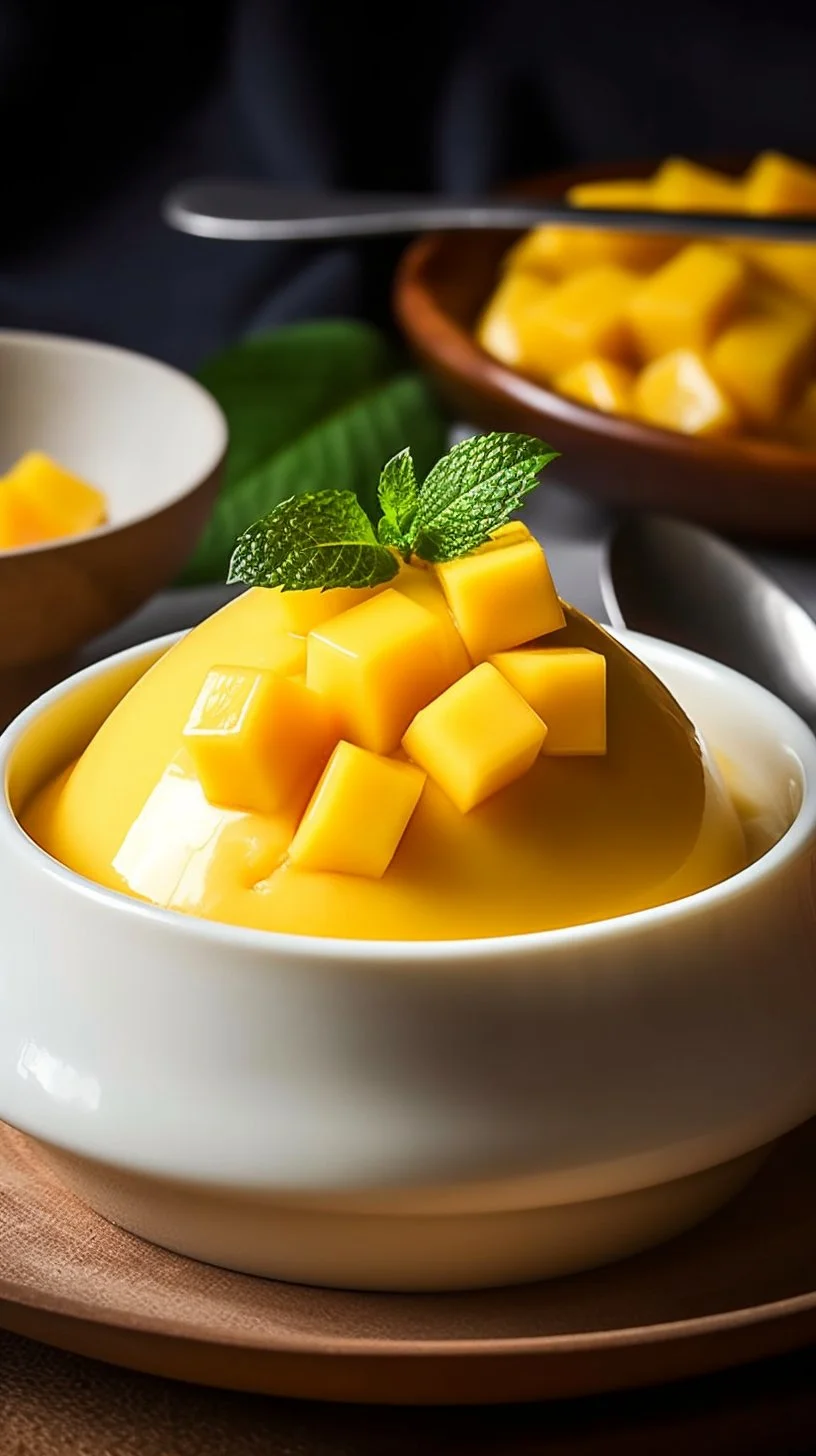
I remember the summer my grandmother taught me this — the kitchen window open, a fan turning slow, and the sweet scent of mangoes drifting through like a soft hymn. This Mango Coconut Gelatin Dessert is simple, tender, and the kind of thing you make for folks you love. It sets up cool and comforting, just like Sunday afternoons on the porch.
Why make this recipe
This dessert is a little piece of sunshine you can keep in the fridge. It’s light enough after a heavy meal, mellow and creamy for a warm day, and gentle enough for folks who prefer plant-based or lighter treats. Best of all, it’s fuss-free and remembers the sweet things — family, stories, and the way a shared bowl can mend a weary heart.
How to make Mango Coconut Gelatin Dessert
Making this is like telling an old story: slow, steady, and with a pinch of sweetness. You’ll blend ripe mango until it’s velvet-smooth, wake the vegan gelatin in cold water, fold in coconut and sugar, and warm everything just enough to dissolve the gelatin. Then you pour it into pretty little bowls, tuck them into the fridge, and wait for that soft wobble that says it’s ready.
Ingredients:
- 12 oz fresh ripe mangoes
- 0.54 cups full-fat coconut milk
- 2 tbsp cold water
- 1.5 tbsp white granulated sugar
- 1.5 tbsp vegan gelatin powder
- Optional: 4 tbsp evaporated milk or coconut milk
Directions:
- Prepare the mangoes by peeling, pitting, and chopping them into small pieces. Blend until smooth. Take a moment to taste — ripe mango is a blessing, and a little nibble never hurts.
- In a large bowl, combine cold water and vegan gelatin; mix until thickened. Let it bloom for a minute so it softens and wakes up.
- Stir in sugar, coconut milk, and blended mango until well combined. If you like it a touch creamier, stir in the optional evaporated milk or extra coconut milk now.
- Heat the mixture gently in a small pot over medium-low heat until the gelatin dissolves completely. Stir slowly and lovingly — don’t let it boil, just enough warmth to make everything friendly and smooth.
- Pour into serving bowls or molds, smoothing the tops if necessary. Cover lightly and refrigerate until set (at least 6 hours).
- Serve chilled with optional toppings like fresh fruit or coconut flakes.
How to serve Mango Coconut Gelatin Dessert
Serve in small chilled bowls or pretty molds for a little Southern charm. Top with a sprinkle of toasted coconut flakes, a few mango slices, or a bright berry for contrast. Sit on the porch, pass around little spoons, and let everyone savor that quiet, cooling sweetness together.
How to store Mango Coconut Gelatin Dessert
Keep covered in the refrigerator for up to 3–4 days. If you used molded shapes, store them gently in a sealed container with a soft paper towel between layers to keep edges from sticking. Freezing isn’t recommended — the texture will change and you’ll lose that silken mouthfeel.
Tips to make Mango Coconut Gelatin Dessert
- Use really ripe mangoes for the best flavor — the sweetness carries the dessert.
- Bloom the vegan gelatin in cold water first; it helps everything dissolve evenly without clumps.
- Heat slowly and don’t boil. Too much heat makes coconut separate or the gelatin lose its temper.
- If you want a silkier texture, run the blended mango through a fine sieve before mixing.
- For a lighter version, reduce sugar slightly or use light coconut milk, but remember the fat adds to that comforting mouthfeel.
Variations (if any)
- Coconut-Free: Substitute the coconut milk with full-fat dairy or evaporated milk for a different richness.
- Layered: Make a plain coconut layer by setting half the mix first, then adding a mango layer for pretty contrast.
- Spiced: A tiny pinch of cardamom or a drop of lime zest can brighten the mango without stealing the show.
- Vegan firm set: If you prefer a firmer jelly, consult your gelatin brand’s instructions and gently increase the vegan gelatin as needed.
FAQs
Q: Can I use store-bought mango puree instead of fresh mangoes?
A: Yes, you can. Use an equal amount of a good-quality mango puree, but taste first — some purees are sweeter, so you may want to reduce the added sugar.
Q: What is vegan gelatin powder, and can I use agar-agar instead?
A: Vegan gelatin powder is a plant-based setting agent; agar-agar can be used but behaves differently — it sets firmer and often needs boiling to activate. If you swap in agar, follow the package instructions and gently adjust quantities.
Q: My gelatin didn’t set. What went wrong?
A: Common reasons are not blooming the gelatin, overheating (boiling can break setting power), or using too much liquid for the gelatin amount. Make sure to bloom properly and heat only until dissolved.
Q: Can I make this ahead for a party?
A: Absolutely. Make it the day before so flavors settle and it’s perfectly chilled by serving time. It’s a lovely make-ahead dessert that frees you up to tend to your guests.
Conclusion
If you’d like a quick reference to another mango gelatin take on this idea, I often look to a simple Mango Gelatin Recipe – Mommypotamus for inspiration. For those curious about using agar-agar and a fully vegan approach, this Vegan Mango And Coconut Jello With Agar Agar | Woon Mamuang guide is a lovely companion.
There’s something tender about putting a bowl of something sweet on the table — it’s a small, honest way to say you care. Come back to this recipe when you need a little summer and a lot of comfort.
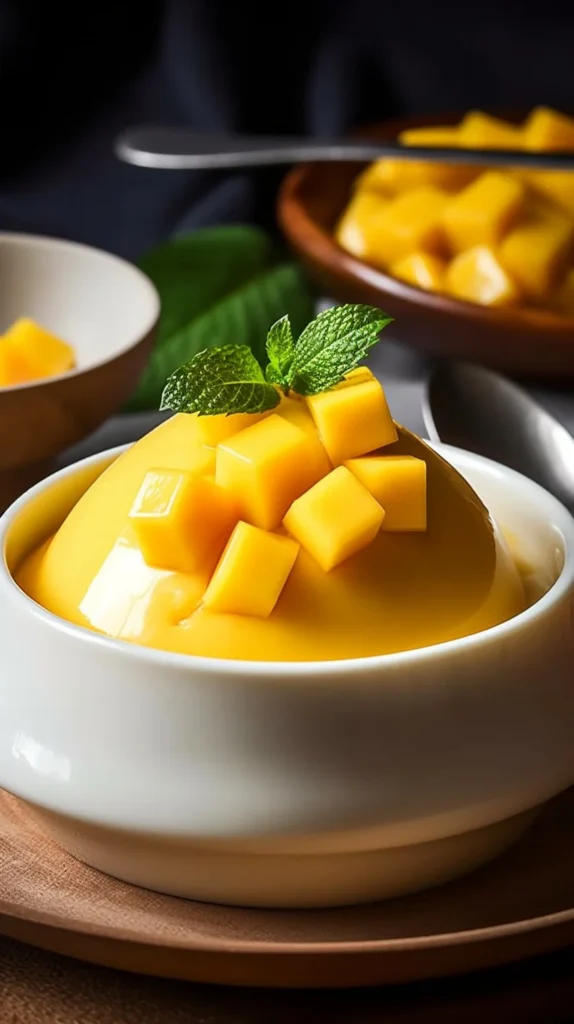
Mango Coconut Gelatin Dessert
Ingredients
Method
- Prepare the mangoes by peeling, pitting, and chopping them into small pieces. Blend until smooth. Taste to ensure sweetness.
- In a large bowl, combine cold water and vegan gelatin; mix until thickened. Let it bloom for about a minute.
- Stir in sugar, coconut milk, and blended mango until well combined.
- If desired, incorporate the optional evaporated milk or extra coconut milk for a creamier texture.
- Heat the mixture gently in a small pot over medium-low heat until the gelatin dissolves completely, stirring slowly to avoid boiling.
- Pour into serving bowls or molds, smoothing the tops if necessary. Cover lightly and refrigerate until set, a minimum of 6 hours.