
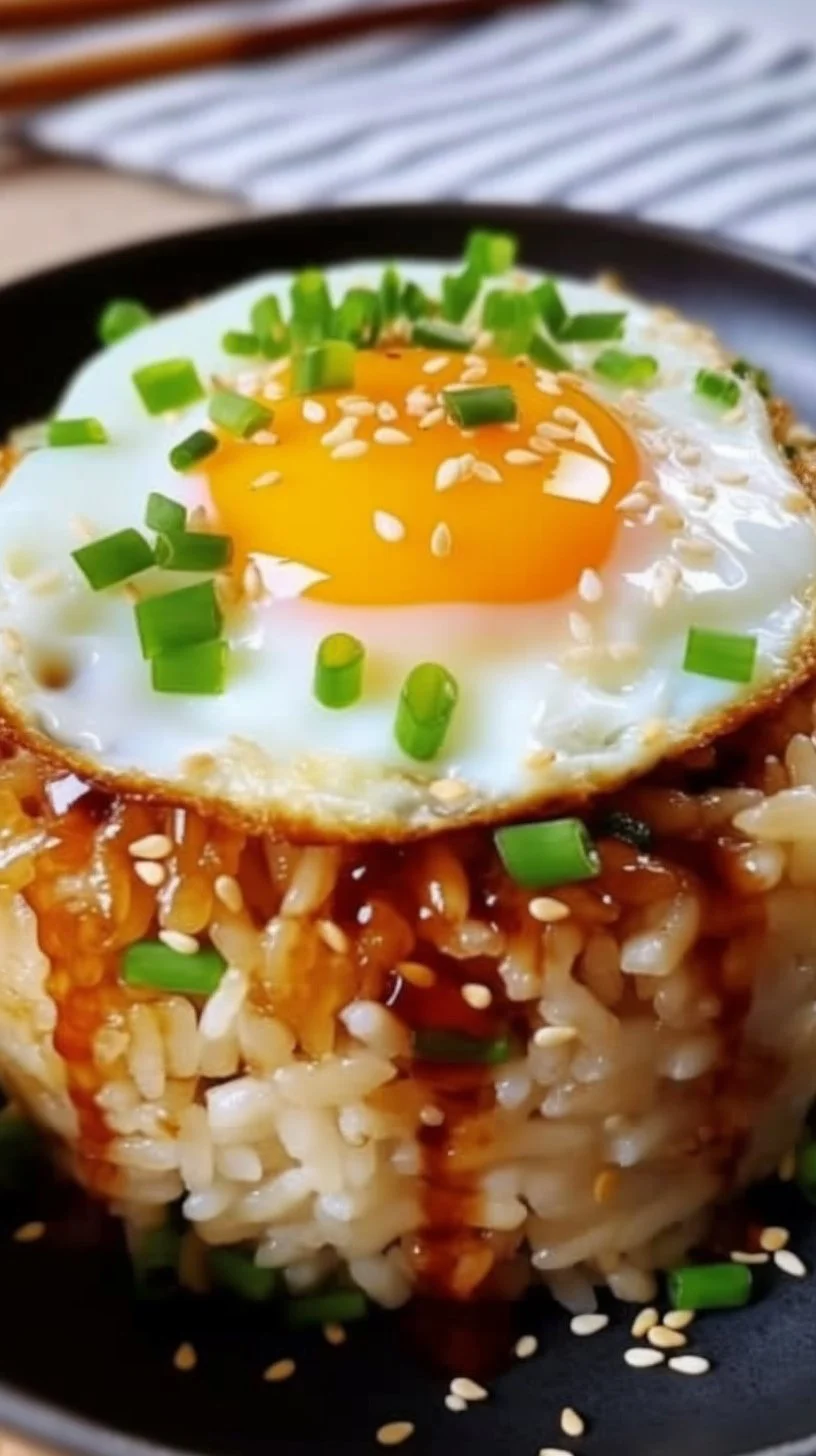
A paper-stall sunrise in Seoul, a hurried market cook tossing a bowl together between customers — that’s the kind of travel memory this dish carries. Simple, soulful, and loud with comfort. Korean Egg Rice is the pocket-sized passport of street-food nostalgia.
Why make this recipe
You want fast, filling, and ferociously comforting. This recipe takes pantry basics and turns them into a warm, salty-sesame hug — perfect for jet-lag breakfasts, midnight cravings, or when you need a tiny, perfect taste of Korea without an expensive plane ticket.
How to make Korean Egg Rice
Think of this as a one-bowl cinematic scene: eggs meet rice, soy and sesame write the script, green onions add the final wink. It’s more than scrambled eggs on rice — it’s a ritual of texture and aroma that travels from kitchen counter to memory.
Ingredients:
- 2 cups cooked white rice (or brown rice)
- 4 large eggs
- 2 tablespoons soy sauce
- 1 tablespoon sesame oil
- 1 teaspoon salt
- 1 teaspoon black pepper
- 2 green onions (chopped)
- Sesame seeds (for garnish)
- Optional: vegetables (spinach, carrots, bell peppers)
Directions:
- Prepare the Rice: If you haven’t done so already, cook the rice according to package instructions. Set aside.
- Whisk the Eggs: In a bowl, crack the eggs and whisk them until well combined. Add soy sauce, sesame oil, salt, and black pepper. Mix thoroughly.
- Heat the Pan: Heat a non-stick skillet over medium heat. Add a splash of sesame oil for extra flavor.
- Cook the Eggs: Pour the egg mixture into the skillet. Allow it to cook undisturbed for about 1-2 minutes until the edges start to set.
- Scramble the Eggs: Gently stir the eggs with a spatula, allowing the uncooked portions to flow to the edges. Cook until the eggs are just set but still soft.
- Combine with Rice: In a large bowl, combine the cooked rice and scrambled eggs. Gently mix until the rice is evenly coated with the egg mixture.
- Add Green Onions: Fold in the chopped green onions for added flavor and freshness.
- Check Seasoning: Taste and adjust seasoning if necessary. Add more soy sauce or sesame oil according to your preference.
- Serve: Transfer the Korean Egg Rice to serving bowls and garnish with sesame seeds and additional green onions if desired.
How to serve Korean Egg Rice
Serve it hot in a deep bowl, steam rising like a city skyline. Top with extra toasted sesame seeds and a drizzle of sesame oil. For street-food swagger, add a spoonful of kimchi or a squirt of gochujang on the side — let people mix it in like a tiny ritual.
How to store Korean Egg Rice
Cool quickly and transfer to an airtight container. Refrigerate up to 3 days. Reheat gently in a skillet with a splash of water or sesame oil (or microwave with a damp paper towel) to revive that soft, just-cooked texture.
Tips to make Korean Egg Rice
- Use day-old rice if you can — it’s drier and absorbs the egg flavors better.
- Keep the eggs slightly undercooked in the pan; residual heat finishes them when you mix with rice.
- Toast sesame seeds briefly in a dry pan for an aroma boost.
- If adding veggies, quickly sauté them first so they don’t make the bowl soggy.
- Taste as you go — soy sauce levels can vary wildly.
Variations (if any)
- Veg-forward: Toss in sautéed spinach, shredded carrots, or thinly sliced bell peppers for crunch and color.
- Protein boost: Add diced ham, tuna, or leftover grilled chicken.
- Spicy Seoul: Stir in a little gochujang or chili oil for an ember-kick.
- Vegan twist: Replace eggs with scrambled tofu seasoned with turmeric, black salt (kala namak) for an eggy sulfur note, and a splash of soy sauce.
FAQs
Q: Can I use brown rice instead of white rice?
A: Absolutely — brown rice adds nuttiness and fiber. The texture is heartier, so adjust moisture (extra sesame oil or a splash of water) if it feels dry.
Q: Is this safe to eat for someone who likes runny eggs?
A: The method here cooks eggs until just set but still soft. If you prefer runny, reduce cook time and mix while slightly more underdone — the hot rice will finish them off.
Q: Can I make this ahead for meal prep?
A: Yes — store separately if possible (eggs and rice together work too). Reheat gently to keep the eggs tender. Avoid overheating which makes eggs rubbery.
Q: What can I serve alongside for a fuller meal?
A: Kimchi, pickled cucumbers, miso soup, or a simple side of seasoned seaweed (gim) amps this into a full-on dinner.
Conclusion
If you want to trace the lineage of a street-snack that feels like sunset alleys and midnight diners, try the Egg rice (Gyeranbap: 계란밥) recipe by Maangchi for a classic, lovingly detailed version. For a lightning-fast, five-minute spin on the same idea, check out this Easy Gyeran Bap Recipe (Korean Egg Rice in 5 Minutes) and let the simple magic of egg and rice carry you somewhere delicious.
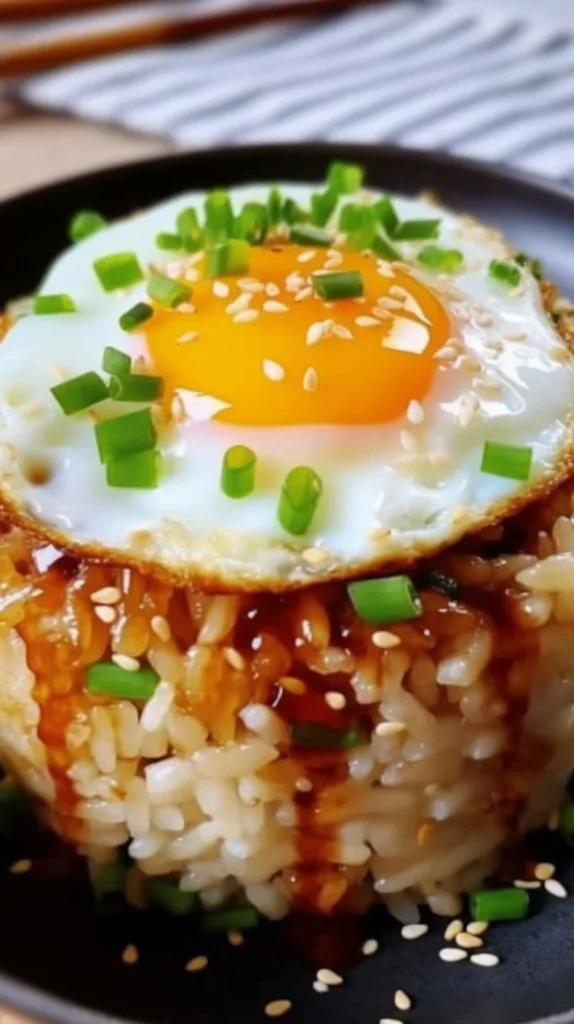
Korean Egg Rice
Ingredients
Method
- Cook the rice according to package instructions and set aside.
- In a bowl, crack the eggs and whisk them until well combined with soy sauce, sesame oil, salt, and black pepper.
- Heat a non-stick skillet over medium heat and add a splash of sesame oil.
- Pour the egg mixture into the skillet and let it cook undisturbed for about 1-2 minutes until the edges start to set.
- Gently stir the eggs with a spatula, allowing uncooked portions to flow to the edges, and cook until just set but still soft.
- In a large bowl, combine the cooked rice and scrambled eggs, gently mixing until evenly coated.
- Fold in the chopped green onions.
- Taste and adjust seasoning if necessary.
- Serve hot in bowls, garnished with sesame seeds and additional green onions, and optional kimchi or gochujang on the side.