
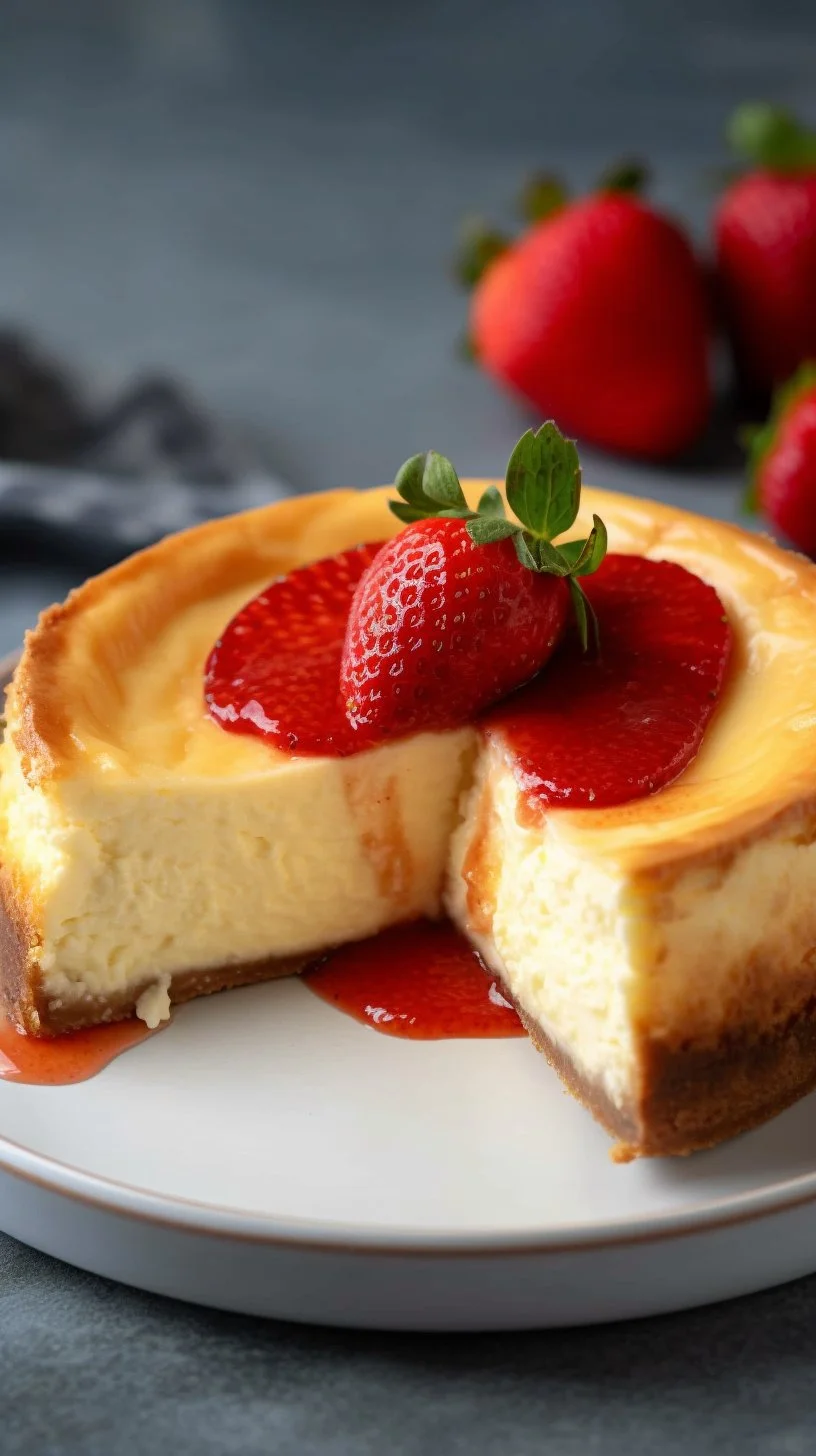
A pale, satin disk that trembles with a promise of cream and light — this cheesecake is quiet in the oven and luminous on the plate.
Its aroma is a subtle hymn of warm vanilla and baked milk, the hush between one spoonful and the next.
Serve it simply, and notice how modest ingredients become something almost lyrical.
Why make this recipe
This High Protein Cottage Cheese Cheesecake is a small lesson in alchemy: humble cottage cheese and eggs transform into a silk-supple custard with a whisper of tang. It’s ideal when you want dessert that feels indulgent yet clear-headed—protein-forward, low in added sugar, and surprisingly weightless. For weeknight elegance, post-workouts, or a restorative weekend bake, it offers texture, comfort, and restraint.
How to make High Protein Cottage Cheese Cheesecake
Ingredients:
- 2¼ cups (500 g) Cottage cheese
- 2 Eggs
- ¼ cup (50 g) Stevia or other sweetener
- ½ teaspoon Vanilla bean paste or 1 teaspoon vanilla extract
- Sugar-free jam (optional)
- Fresh fruits (optional)
Directions:
- Preheat oven to 325°F (160°C). Line a 7-inch (18cm) pan with parchment paper and set aside.
- Add cottage cheese, eggs, stevia, and vanilla to a blender or food processor and blend until smooth.
- Pour the cake batter through a sieve directly into the pan to reduce air bubbles (optional).
- Bake for 45-50 minutes or until golden and the edges are set, while the center is still slightly jiggly.
- Turn off the oven and leave the cake in the oven for 1 hour.
- Allow to cool completely, then refrigerate for at least 4 hours before serving.
- Serve with fresh fruits or sugar-free jam, or enjoy as is.
How to serve High Protein Cottage Cheese Cheesecake
Serve chilled, sliced with a delicate offset spatula. The surface should be satin-smooth; each slice reveals a creamy, slightly custardy interior that trembles ever so gently. Crown with a spoonful of sugar-free jam for a glossy note, or scatter sliced berries for a bright contrast—each bite balances proteinous creaminess with the fresh snap of fruit.
How to store High Protein Cottage Cheese Cheesecake
Wrapped gently in parchment and then in plastic wrap, the cheesecake will keep in the refrigerator for 3–4 days. For longer keeping, slice and freeze individual portions wrapped tightly; thaw in the fridge overnight. Always return to cool temperatures after serving to preserve the silky texture.
Tips to make High Protein Cottage Cheese Cheesecake
- For the silkiest texture, blend until the cottage cheese is completely smooth; a food processor works wonders.
- Sifting the batter into the pan is a small, thoughtful step that reduces bubbles and yields an even top.
- Avoid overbaking. The center should still have a slight jiggle when you remove it—carryover heat will finish it in the cooling hour.
- Use full-fat cottage cheese for richer mouthfeel; if you choose low-fat, expect a firmer finish.
- Chill fully before slicing; cold sets the custard and produces clean edges.
Variations
- Lemon-vanilla: Add 1 teaspoon grated lemon zest to the batter for a bright lift.
- Almond essence and toasted almonds: Swap part of the vanilla for almond extract and scatter toasted slivers on top.
- Light crust: Press a thin layer of crushed almonds or low-carb biscuits into the pan before pouring the batter for a modest, nutty base.
- Spiced berry compote: Warm berries with a touch of cinnamon and a sugar substitute for a warm, saucy topping.
FAQs
Q: Can I use ricotta instead of cottage cheese?
A: Ricotta can be used, and it will produce a similarly creamy cake but with a slightly different texture—often smoother and less tangy. If using ricotta, blend to a fine consistency as you would cottage cheese.
Q: My cheesecake cracked on top—what happened?
A: Cracks commonly come from overmixing (introducing too much air) or overbaking. Gentle blending, sieving, and not exceeding the recommended bake time will help. Cooling slowly in the turned-off oven also reduces stress that causes cracks.
Q: Can I make this dairy-free or vegan?
A: This recipe relies on eggs and cottage cheese for structure and protein. For a dairy-free or vegan version, you’ll need a different approach—typically using silken tofu, vegan cream cheese, and an egg replacer—so results will differ from this high-protein profile.
Q: Is this recipe suitable post-workout?
A: Yes. With a high proportion of protein from cottage cheese and simple ingredients, it can serve as a restorative treat after training—especially if paired with fresh fruit for carbs.
Conclusion
For more inspiration on protein-forward bakes and variations, I like the thoughtful take on a similar High Protein Cottage Cheese Cheesecake – Avocado Skillet, and for a lighter, approachable version, see this Easy Cottage Cheese Cheesecake – The Pancake Princess.
Baking asks for patience and attention; in waiting, it teaches us how small, careful gestures become the language of comfort.
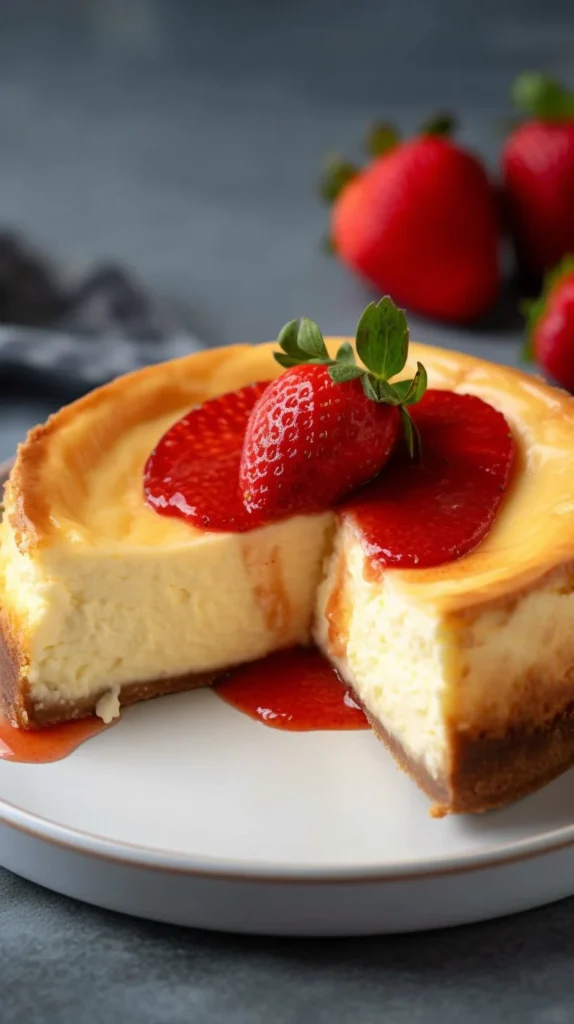
High Protein Cottage Cheese Cheesecake
Ingredients
Method
- Preheat the oven to 325°F (160°C). Line a 7-inch (18cm) pan with parchment paper and set aside.
- Add cottage cheese, eggs, stevia, and vanilla to a blender or food processor and blend until smooth.
- Pour the cake batter through a sieve directly into the pan to reduce air bubbles (optional).
- Bake for 45-50 minutes or until golden and the edges are set, while the center is still slightly jiggly.
- Turn off the oven and leave the cake in the oven for 1 hour.
- Allow to cool completely, then refrigerate for at least 4 hours before serving.
- Serve chilled, sliced with a delicate offset spatula. The surface should be satin-smooth; each slice reveals a creamy, slightly custardy interior.
- Crown with a spoonful of sugar-free jam or scatter sliced berries for contrast.