
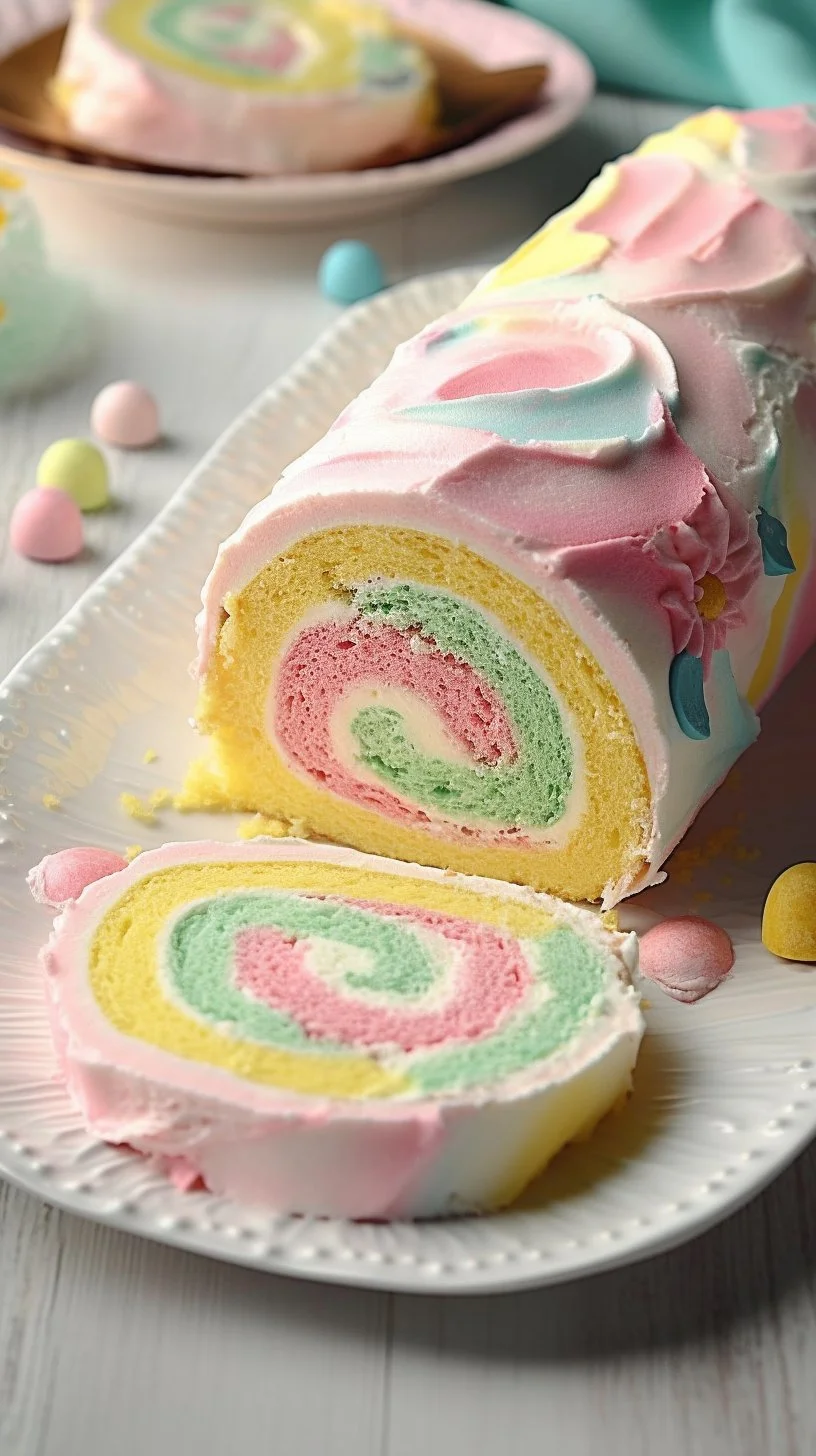
A ribbon of sponge, delicately browned at the edges, unfurls like a spring morning. The cake is light enough to float on the tongue, the whipped filling cool and airy, and pastel chocolate drips like watercolor across its surface. Each slice is a quiet celebration of texture, scent, and gentle patience.
Why make this recipe
This Easter Cake Roll is an invitation to ceremonial baking: it asks only for a few good ingredients and the will to be attentive. It rewards you with a cake that is festive without fuss — airy sponge, silky cream, and pastel decorations that speak of childhood recollections and spring afternoons. Make it when you want a dessert that is as pleasing to look at as it is to taste.
How to make Easter Cake Roll
Ingredients:
- 3/4 cup all purpose flour
- 1 tsp baking powder
- 1/4 tsp salt
- 4 large eggs
- 3/4 cup granulated sugar
- 1 tsp vanilla extract
- 1/4 cup powdered sugar for dusting
- 1 cup heavy whipping cream
- 1/4 cup powdered sugar (for filling)
- 1 tsp vanilla extract (for filling)
- 1 cup white chocolate chips, melted
- Food coloring pastel colors (pink, yellow, blue, green)
- Sprinkles, candy eggs, or edible bunny decorations
Directions:
- Preheat the oven to 350°F (175°C). Line a 10×15 inch jelly roll pan with parchment paper and lightly grease the paper so the sponge releases cleanly.
- In a medium bowl, whisk together the flour, baking powder, and salt until homogenous — this is the quiet, structural beginning.
- In a separate large bowl, beat the eggs on high for 4 to 5 minutes until they become thick, pale, and ribbon-like when the whisk is lifted.
- Gradually add the granulated sugar and 1 tsp vanilla extract while continuing to beat until fully integrated and glossy.
- Gently fold the dry ingredients into the egg mixture with a rubber spatula. Use large, enveloping strokes to keep the batter airy; stop as soon as the flour streaks disappear.
- Pour the batter into the prepared pan and spread it evenly with a small offset spatula. Smooth the top without overworking the batter.
- Bake for 10 to 12 minutes, until the cake springs back when lightly touched and the edges are just beginning to take on a faint gold.
- Remove the cake from the oven and immediately turn it out onto a clean kitchen towel generously dusted with powdered sugar. Carefully peel away the parchment paper.
- Starting from a short side, roll the cake together with the towel into a tight spiral. This trains the sponge to roll without cracking. Let the rolled cake cool completely on a wire rack.
- While the cake cools, prepare the filling: whip 1 cup heavy whipping cream with 1/4 cup powdered sugar and 1 tsp vanilla extract until stiff peaks form. Keep it chilled.
- Unroll the cooled cake gently. Spread the whipped filling evenly across the surface, leaving a small border so the filling doesn’t seep out.
- Roll the cake back up, this time without the towel, maintaining a gentle but secure tension so the roll holds its shape.
- Melt the white chocolate chips until smooth. Divide into small bowls and tint each with a pastel food coloring. Use a spoon or piping bag to drizzle or pipe bands and dots of color across the roll.
- Adorn with sprinkles, candy eggs, or edible bunny shapes for a whimsical finish. Chill the roll for at least 30 minutes before slicing to set the filling and decoration.
How to serve Easter Cake Roll
Slice with a sharp serrated knife, wiping the blade between cuts for clean edges. Serve chilled or at cool room temperature so the filling is silky but not weeping. Present slices on a white plate to let the pastels and textures sing; a small quenelle of fresh whipped cream or a scatter of edible flowers will heighten the springtime impression.
How to store Easter Cake Roll
Keep any uneaten cake in an airtight container in the refrigerator for up to 3 days. For longer storage, slice and freeze layers between parchment sheets in a sealed container for up to one month; thaw gently in the refrigerator before serving. Avoid leaving the decorated roll at room temperature for extended periods, especially if the weather is warm.
Tips to make Easter Cake Roll
- Beat the eggs until they reach a pale, ribbon stage — this is the lift your sponge depends on.
- Fold the flour in small portions to preserve volume; overmixing will yield a dense roll.
- Dusting the towel with powdered sugar prevents sticking and adds a hint of sweetness to the underside.
- If the cake shows a hairline crack when rolled, press the seam gently under the roll; once chilled, it will be less noticeable.
- Chill the cake before slicing to get clean, neat slices and to keep decorations intact.
Variations
- Lemon-scented: Add 1 tsp grated lemon zest to the batter and replace vanilla in the filling with 1/2 tsp lemon extract.
- Chocolate swirl: Fold 2 tbsp unsweetened cocoa into 1/4 of the batter to create a marbled effect before pouring into the pan.
- Fruit-studded: Spread a thin layer of seedless raspberry jam on the sponge beneath the whipped cream for a tart counterpoint.
- Vegan adaptation: Use aquafaba whipped to stiff peaks and a dairy-free white chocolate for coating; substitute a vegan egg replacer blend for the sponge, noting texture will differ.
FAQs
Q: How can I prevent the cake from cracking when I roll it?
A: Roll the cake while still warm in the towel — that “training” step sets the shape. Fold gently and don’t overfill; chilling the rolled cake before final slicing helps the seam settle and minimizes visible cracks.
Q: Can I make the cake ahead of time?
A: Yes. You can make and roll the cake a day ahead, then unroll, fill, and re-roll before decorating. Stored in the refrigerator, the assembled roll keeps well for up to 3 days.
Q: What if the filling becomes too soft?
A: Ensure the cream is whipped to stiff peaks and keep it chilled until assembly. If it softens, re-whip briefly. You can also fold in a tablespoon of mascarpone to stabilize the filling.
Q: Can I use other chocolates for decoration?
A: Absolutely. Dark or milk chocolate can be tempered or melted and colored with oil-based confectionery colors. White chocolate is easiest to tint with regular food coloring because it accepts color more evenly.
Conclusion
For a slightly different take on a springtime roll with similar charm, you might enjoy the decorated twists in Easter Swiss Roll – Crunch Time Kitchen, or compare another homey version at Easter Cake Roll Recipe – Little Sunny Kitchen. In the quiet work of folding batter and beating cream, baking asks for patience; the small rewards — a moist slice, a pastel drip, a shared moment — are worth every gentle minute.
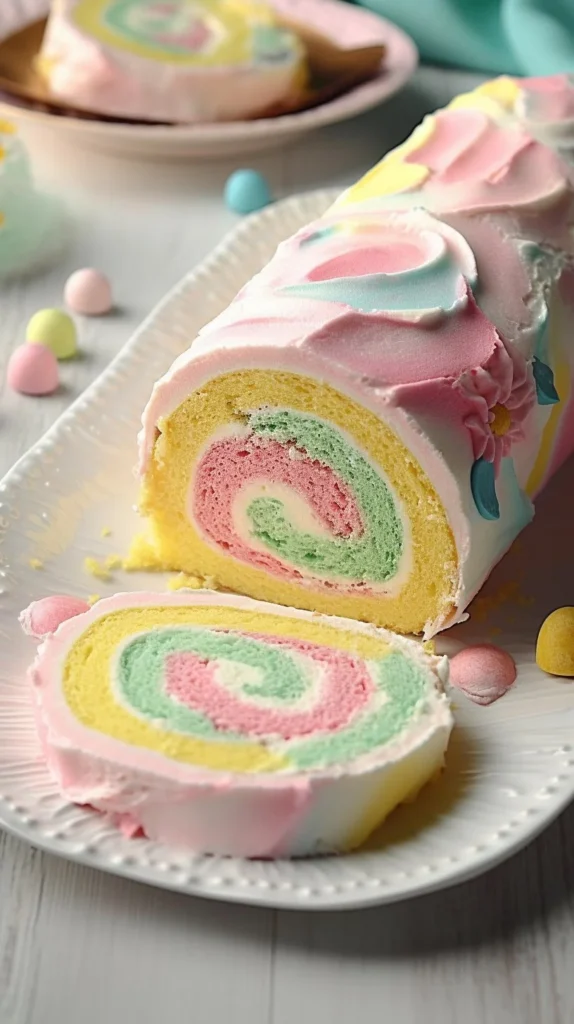
Easter Cake Roll
Ingredients
Method
- Preheat the oven to 350°F (175°C). Line a 10x15 inch jelly roll pan with parchment paper and lightly grease the paper.
- In a medium bowl, whisk together the flour, baking powder, and salt until homogenous.
- In a separate large bowl, beat the eggs on high for 4 to 5 minutes until thick, pale, and ribbon-like.
- Gradually add the granulated sugar and 1 tsp vanilla extract while continuing to beat until fully integrated.
- Gently fold the dry ingredients into the egg mixture with a rubber spatula until just combined.
- Pour the batter into the prepared pan and spread it evenly.
- Bake for 10 to 12 minutes until the cake springs back when lightly touched.
- Remove the cake from the oven and turn it out onto a clean kitchen towel dusted with powdered sugar.
- Starting from a short side, roll the cake together with the towel into a tight spiral and let it cool completely.
- While the cake cools, whip the heavy whipping cream with 1/4 cup powdered sugar and 1 tsp vanilla extract until stiff peaks form.
- Gently unroll the cooled cake and spread the whipped filling evenly, leaving a small border.
- Roll the cake back up without the towel, maintaining gentle tension.
- Melt the white chocolate chips until smooth, color them with food coloring, and drizzle over the roll.
- Adorn with sprinkles, candy eggs, or edible bunny shapes.
- Chill the roll for at least 30 minutes before slicing.