
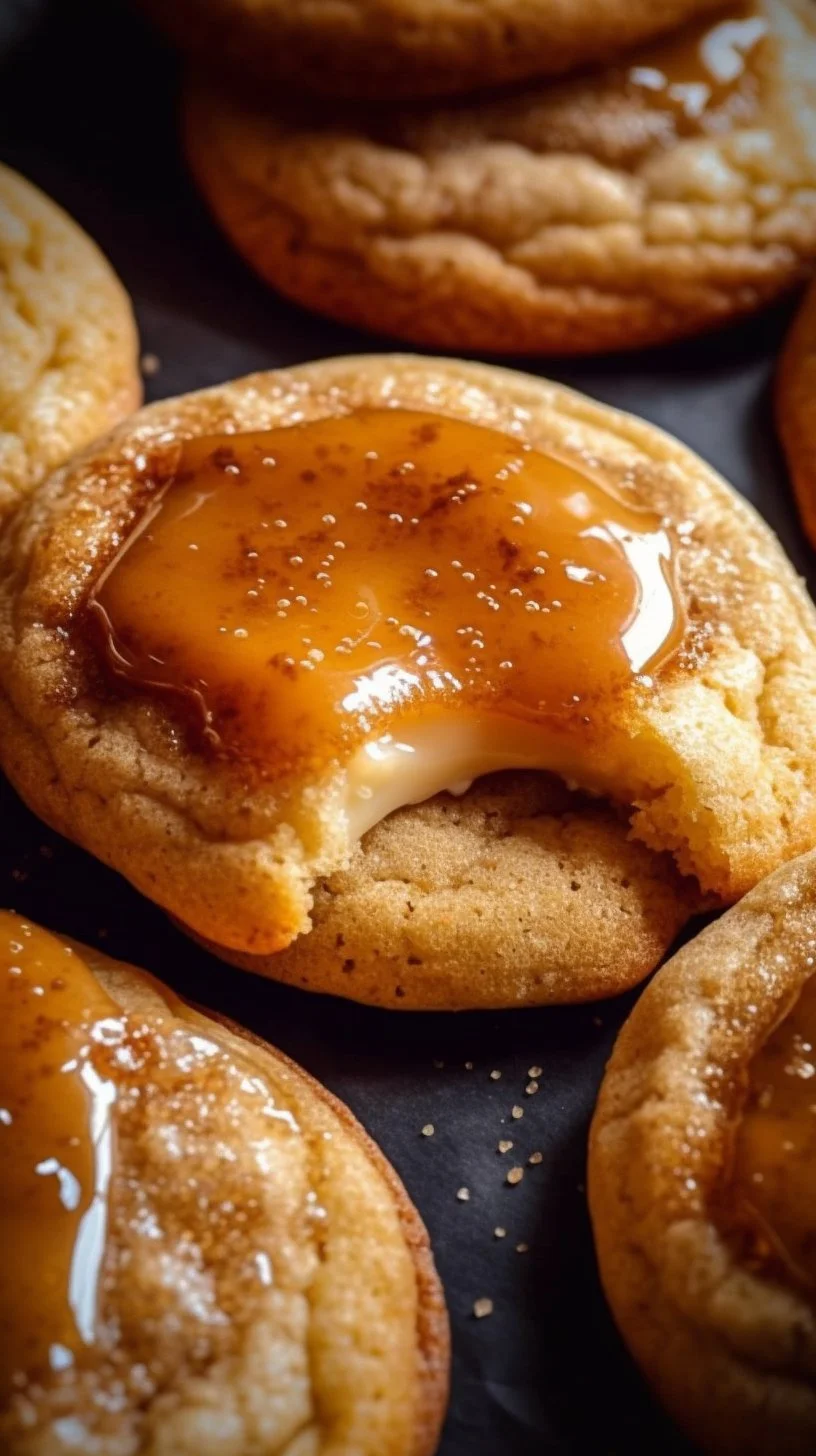
A thin crackle of caramel, the soft yellow hush of pastry cream — a cookie that remembers the slow ceremony of a brûlée, tempered into a tender, sugared bite.
Why make this recipe
Here is a small, celebratory confection that marries the silken richness of crème pâtissière with the yield of a butter cookie. It’s an elegant project for afternoons when you want something both intimate and theatrical: the torch’s kiss, the scent of warm vanilla, the contrast between crisp sugar and pillowy crumb.
How to make Creme Brûlée Cookies
This recipe is a two-part affair: a rich pastry cream is cooked and cooled, while a delicate, buttery dough is made and shaped to cradle that cream. The finished cookies are dusted, filled, baked just until edges are golden, then finished with a caramelized sugar crown — a little moment of flourish for each bite.
Ingredients:
- 2 1/4 cups (540 ml) whole milk
- 6 egg yolks
- 1 cup + 2 tbsp (225 g) granulated white sugar
- 1/8 tsp salt
- 1 1/2 tbsp vanilla bean paste
- 3 1/2 tbsp (28 g) cornstarch
- 3 tbsp (42 g) unsalted butter, cut in cubes
- 2 1/2 cups (313 g) all-purpose flour, spooned and leveled
- 1/2 tsp baking powder
- 1/2 tsp salt
- 1 1/4 cup (250 g) granulated white sugar
- 1 cup (224 g) unsalted butter, softened
- 1 egg
- 1 tbsp vanilla bean paste
- 1/2 cup (100 g) granulated white sugar (for rolling the dough in)
- 1/2 cup (100 g) granulated white sugar (for the brulee topping)
Directions:
- Prepare the pastry cream by simmering milk and whisking egg yolks with sugar and vanilla. Combine until thickened.
- Warm the whole milk in a saucepan until it just shivers at the edge. In a bowl, whisk the egg yolks with 1 cup + 2 tbsp sugar, the salt, vanilla bean paste, and cornstarch until smooth. Temper the yolks by whisking in a little of the hot milk, then return the mixture to the pan and cook gently, whisking, until it thickens to a custard that coats the back of a spoon. Remove from heat and whisk in the cubed butter until glossy. Press plastic directly onto the surface and chill until firm.
- Cream softened butter and sugar in a bowl, then mix in an egg and vanilla. Gradually add the dry ingredients.
- In a stand mixer or large bowl, beat 1 cup softened butter with 1 1/4 cup sugar until light and airy. Add the egg and 1 tbsp vanilla bean paste and mix until combined. Sift together the flour, baking powder, and 1/2 tsp salt; add to the butter mixture on low speed until a soft dough forms. Chill briefly if too sticky to handle.
- Preheat the oven to 350°F (175°C). Roll dough into balls, coat with sugar, and create indentations to fill with pastry cream.
- Portion the dough into walnut-sized balls. Roll each ball in the 1/2 cup sugar for coating, then place on a lined baking sheet. Use your thumb or the back of a small spoon to create a shallow well in the center of each ball, careful not to press through to the baking sheet. Pipe or spoon a small dollop of chilled pastry cream into each indentation.
- Bake for 9 minutes until edges are golden. Cool on racks before caramelizing sugar topping with a torch.
- Bake just until the edges take on a pale gold and the pastry cream has set. Transfer to a cooling rack. Once cool, sprinkle the reserved 1/2 cup sugar evenly over each cream-filled well and caramelize with a kitchen torch until the sugar melts and forms a dark, glassy crust. If you do not have a torch, a very hot broiler for a moment can work — watch closely.
How to serve Creme Brûlée Cookies
Serve them at room temperature so the caramel keeps its glassy snap and the pastry cream remains satiny. Arrange on a simple platter, allow the caramelized tops to rest for a minute, then present with a pot of tea or a small cuvee of dessert wine. Each cookie is best enjoyed within the first hours of torching, when the contrast is at its brightest.
How to store Creme Brûlée Cookies
Once torched, store in a single layer in an airtight container in the refrigerator for up to 24 hours; the caramelized sugar will begin to soften over time. If un-torched, keep the baked, filled cookies chilled for up to 48 hours and caramelize just before serving for the best texture.
Tips to make Creme Brûlée Cookies
- Chill the pastry cream completely before filling; warm cream will make the dough soggy.
- When creating the wells, keep them shallow — too deep risks losing structure during baking.
- Use vanilla bean paste for flecks of seed and concentrated aroma; it reads beautifully against the pale cream.
- If your dough spreads too much, chill the balls for 15–20 minutes before baking.
- For a perfectly even caramel, sprinkle sugar in a thin, even layer before torching and hold the flame moving steadily to avoid burning.
Variations (if any)
- Citrus-brûlée: Fold 1 tsp finely grated orange or lemon zest into the pastry cream for a bright note beneath the caramel.
- Salted caramel: Sprinkle a flake of flaky sea salt atop the fresh caramel for a savory lift.
- Chocolate-tinged: Stir 1–2 tbsp cocoa powder into the cookie dough for a subtle chocolate backbone that pairs with the vanilla custard.
FAQs
Q: Can I make the pastry cream ahead of time?
A: Yes. Pastry cream can be made 1–2 days ahead, covered directly with plastic wrap to prevent a skin, and chilled until needed.
Q: What if I don’t have a kitchen torch?
A: A very hot broiler can caramelize the sugar, but watch closely and place the rack high in the oven. Torch is preferred for precision and to avoid warming the cookies.
Q: How much pastry cream do I need per cookie?
A: Use a small spoon or a 1/2 teaspoon piping amount — just enough to fill the well without overflowing during baking.
Q: Can I freeze these?
A: I don’t recommend freezing the filled cookies; the cream’s texture will degrade. You can freeze unbaked dough balls for up to a month, then thaw and bake, filling and torching fresh.
Q: Why did my caramel get grainy?
A: Graininess often comes from undissolved sugar or rapid, uneven heating. Use a fine, even sprinkle and a steady torch motion to melt sugar smoothly.
Conclusion
For an elegant reference and a different take on technique, see Creme Brûlée Cookies – In Bloom Bakery, and for another home-baker’s riff with step-by-step photos, visit Crème Brûlée Cookies – Averie Cooks.
Baking asks for patience and attention; in returning to the little rituals — whisking, chilling, the soft crack of caramel — we learn to slow down and savor the everyday ceremony.
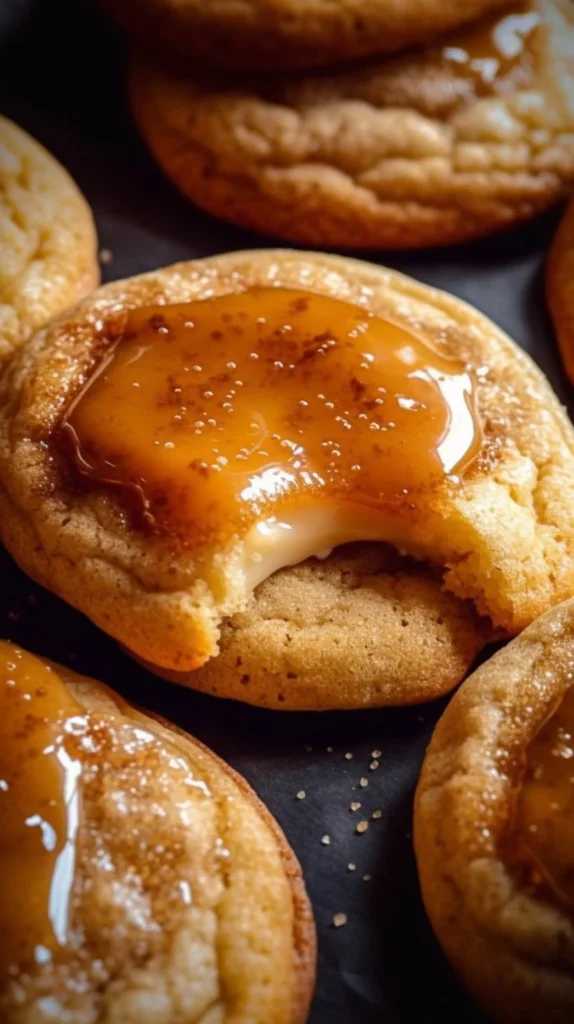
Crème Brûlée Cookies
Ingredients
Method
- Warm the whole milk in a saucepan until it just shivers at the edge.
- In a bowl, whisk the egg yolks with 1 cup + 2 tbsp sugar, the salt, vanilla bean paste, and cornstarch until smooth.
- Temper the yolks by whisking in a little of the hot milk, then return the mixture to the pan and cook gently, whisking, until it thickens to a custard that coats the back of a spoon.
- Remove from heat and whisk in the cubed butter until glossy. Press plastic directly onto the surface and chill until firm.
- In a stand mixer or large bowl, beat 1 cup softened butter with 1 1/4 cup sugar until light and airy.
- Add the egg and 1 tbsp vanilla bean paste and mix until combined.
- Sift together the flour, baking powder, and 1/2 tsp salt; add to the butter mixture on low speed until a soft dough forms.
- Chill briefly if too sticky to handle.
- Preheat the oven to 350°F (175°C).
- Portion the dough into walnut-sized balls.
- Roll each ball in the 1/2 cup sugar for coating, then place on a lined baking sheet.
- Use your thumb or the back of a small spoon to create a shallow well in the center of each ball.
- Pipe or spoon a small dollop of chilled pastry cream into each indentation.
- Bake for 9 minutes until edges are golden. Cool on racks before caramelizing sugar topping with a torch.
- Once cool, sprinkle the reserved 1/2 cup sugar evenly over each cream-filled well.
- Caramelize with a kitchen torch until the sugar melts and forms a dark, glassy crust.
- If you do not have a torch, a very hot broiler can work — watch closely.