
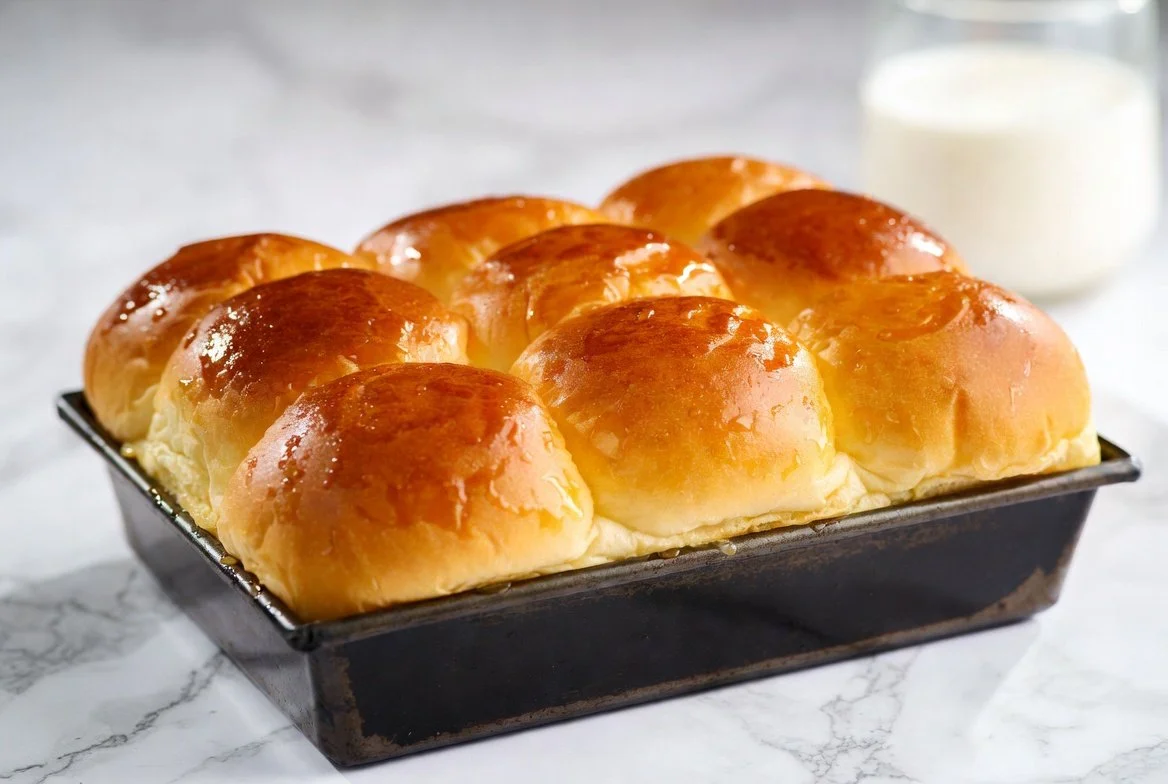
A warm, buttery hush fills the kitchen as the mixer begins to turn — a slow, steady rhythm like a tide coaxing flour and eggs into silk. The dough becomes velvet beneath your fingers, fragrant with cream and the faint honey-sweetness of sugar. Brioche is patience made edible: rich, tender, and luminous.
Why make this recipe
Brioche is a celebration of time and butter: a bread that rewards gentle effort with a tender crumb, a glossy crust, and an aroma that lingers. This recipe produces loaves and rolls that are at once delicate and satisfying — perfect for morning toast, elegant French toast, or a quiet moment with tea.
How to make Brioche Bread
We begin with warmth: room-temperature cream, milk, and egg that invite the yeast to wake without shock. The stand mixer kneads until gluten develops into a soft, slightly tacky dough; seven minutes in your hands, and another hour in a warm fold of cloth, and the dough doubles, soft as a pillow. The second, shorter knead aligns the butter and gluten into a silkier structure; shaping into rectangles and allowing a final proof gives the crumb its gentle lift. A golden egg wash creates a lacquered top, and a simple sugar glaze brushed on warm keeps the crust tender and luminous.
Ingredients:
- 2/3 cup heavy cream, at room temperature
- 1 cup milk plus 1 tablespoon, at room temperature
- 1 large egg, at room temperature
- 1/3 cup sugar
- 4 cups all-purpose flour (or 1/2 cup cake flour and 3 1/2 cups bread flour)
- 1 tablespoon active dry yeast or instant yeast
- 1 1/2 teaspoons salt
- 1 beaten egg with 1 teaspoon water (for egg wash)
- 1 tablespoon sugar dissolved in 1 tablespoon hot water (for simple syrup)
Directions:
In the bowl of a stand mixer fitted with a dough hook, add the heavy cream, milk, egg, sugar, cake flour, bread flour, yeast, and salt in that order. Set the mixer to stir and knead for 15 minutes. If the dough sticks, add more flour one tablespoon at a time until it pulls away from the sides. Cover the dough with a damp towel and let it rise in a warm place until doubled in size, about 1-2 hours. Grease two baking vessels with butter. Once risen, stir in the mixer for another 5 minutes. Turn out onto a floured surface, divide, and shape into rectangles. Cut into pieces for loaves or rolls. Arrange in prepared pans and let proof for another hour. Preheat oven to 350°F (175°C) and brush risen dough with egg wash. Bake for 23-25 minutes until golden brown, then brush with simple syrup while warm.
How to serve Brioche Bread
Serve slices warm, their crust still gleaming, with salted butter that melts into the soft, pillowy crumb. For dessert, slice thickly and soak briefly for a custardy French toast. Small rolls are perfect alongside jam or honey; larger loaves frame sandwiches with smoked ham, soft cheeses, or a slow-poached egg.
How to store Brioche Bread
Cool completely before storing to preserve texture. Keep at room temperature, wrapped in a clean tea towel and then in a bread box or loosely in a plastic bag for up to 2 days. For longer keeping, slice and freeze in an airtight bag for up to one month; thaw gently at room temperature or toast directly from frozen.
Tips to make Brioche Bread
- Use room-temperature dairy and egg so the yeast wakes gently and evenly.
- Be patient with kneading: proper gluten development gives the bread its tender yet structured crumb.
- Resist adding too much flour; the dough should remain slightly tacky to yield a soft interior.
- Warm-proof in a turned-off oven with a pan of hot water if your kitchen is cool.
- Brush with simple syrup while the loaves are warm to achieve a subtle sheen and soft crust.
Variations
- Chocolate-studded: fold in dark chocolate chips during the final knead for a decadent breakfast treat.
- Citrus-scented: add grated lemon or orange zest to the dough for a bright, fragrant loaf.
- Savory herb: reduce sugar slightly and fold in chopped rosemary and grated Gruyère for a savory brioche perfect with soups.
FAQs
Q: Can I make this dough by hand if I don’t have a stand mixer?
A: Yes. Knead by hand for roughly 20–25 minutes until the dough is smooth and elastic. It will take more effort but the result can be just as lovely.
Q: How do I know when the dough has risen enough?
A: The dough should double in volume and feel light. A gentle fingertip press leaves an indentation that springs back slowly.
Q: Can I use instant yeast instead of active dry?
A: Yes. Instant yeast can be used interchangeably in this recipe; add it with the dry ingredients and you may find proofing times slightly shorter.
Q: Why does brioche sometimes collapse after baking?
A: Overproofing weakens the dough’s structure; underbaking leaves too much moisture. Follow proof times, watch for a glossy, deep-golden crust, and test the internal temperature (about 190–200°F / 88–93°C for fully baked brioche).
Conclusion
For another detailed take on the classic loaf, see Brioche Bread Recipe – The Flavor Bender, which explores technique and shaping in depth. If you prefer a tried-and-true, approachable version with tips for success, consult Best Brioche Bread Recipe – Delish.
There is a quiet joy in the rhythm of measuring, folding, and waiting — baking is patience translated into something warm and shared.
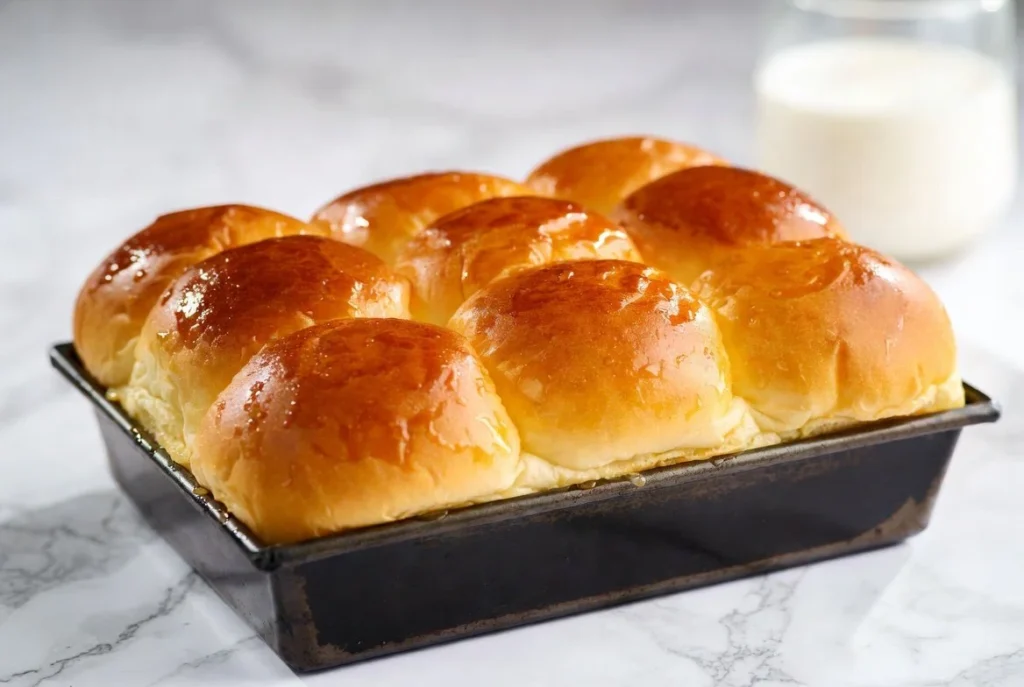
Brioche Bread
Ingredients
Method
- In the bowl of a stand mixer fitted with a dough hook, add the heavy cream, milk, egg, sugar, cake flour, bread flour, yeast, and salt in that order.
- Set the mixer to stir and knead for 15 minutes. If the dough sticks, add more flour one tablespoon at a time until it pulls away from the sides.
- Cover the dough with a damp towel and let it rise in a warm place until doubled in size, about 1-2 hours.
- Grease two baking vessels with butter.
- Once risen, stir in the mixer for another 5 minutes.
- Turn out onto a floured surface, divide, and shape into rectangles. Cut into pieces for loaves or rolls.
- Arrange in prepared pans and let proof for another hour.
- Preheat oven to 350°F (175°C) and brush risen dough with egg wash.
- Bake for 23-25 minutes until golden brown, then brush with simple syrup while warm.