
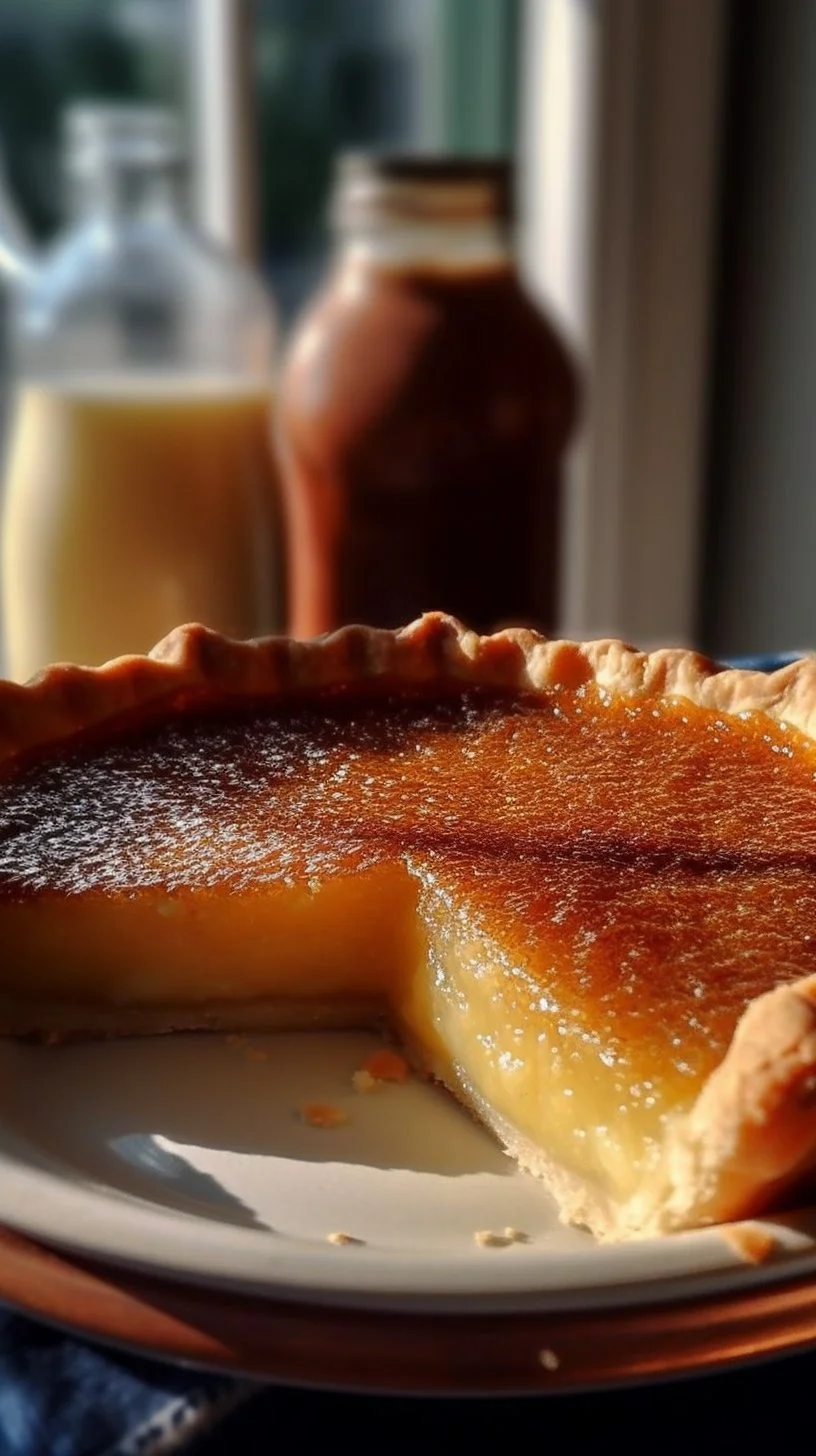
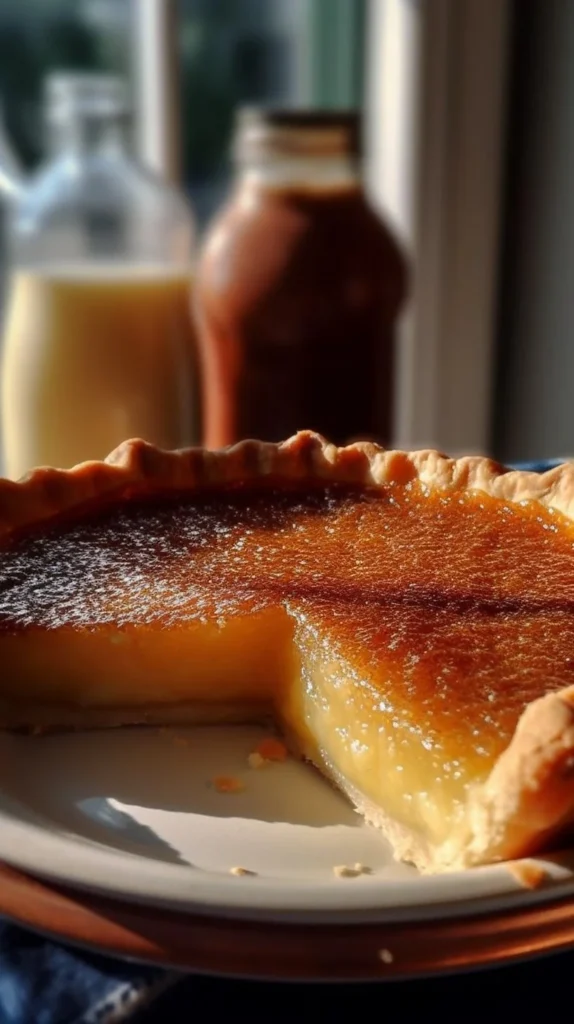
Introduction A warm, amber custard rests in a flaky cradle — bright vinegar brightens the sweetness and the aroma is a soft, old-fashioned promise. This pie tastes like a late afternoon: quiet sunlight, a linen apron, and patience rewarded.
Why make this recipe Vinegar pie is a small miracle of pantry baking — quick, economical, and unexpectedly refined. It uses humble staples to create a custard that is sweet, tang-kissed, and silk-smooth; perfect when you want something that feels antique and honest without fuss.
How to make Best Vinegar Pie This method yields a 9-inch pie with a golden, tender crust and a lightly set, glossy filling. The vinegar lifts the sweetness and sharpens the flavor while eggs and butter create a custard that finishes with a delicate satin sheen.
Ingredients:
- 1 (9-inch) pie crust, homemade or store-bought, chilled
- 1 1/2 cups granulated sugar
- 3 tablespoons all-purpose flour
- 1/4 teaspoon fine sea salt
- 3 large eggs, room temperature
- 2 tablespoons distilled white vinegar or apple cider vinegar
- 2 tablespoons unsalted butter, melted and slightly cooled
- 1 cup whole milk, room temperature (or 3/4 cup milk + 1/4 cup heavy cream for extra silkiness)
- 1 teaspoon pure vanilla extract
- Freshly grated nutmeg or cinnamon (optional, for dusting)
Directions:
- Preheat the oven to 375°F (190°C). Fit the chilled pie crust into a 9-inch pie dish, crimp the edges, and trim any excess. Prick the bottom lightly with a fork.
- If you prefer a crisper base, blind-bake the crust for 10 minutes with pie weights; otherwise you may bake the custard in the raw crust. A brief prebake helps prevent a soggy bottom.
- In a mixing bowl, whisk together the sugar, flour, and salt until homogenous — this ensures no grainy pockets in the custard.
- In a separate bowl, beat the eggs lightly. Whisk in the vinegar, melted butter, milk, and vanilla until the mixture is smooth and slightly glossy.
- Gradually whisk the dry ingredients into the wet mixture until fully blended and velvety. Strain through a fine sieve if you prefer an ultra-silky texture.
- Pour the custard into the prepared pie shell. If you blind-baked, pour into the warm shell; if not, pour into the raw crust gently.
- Bake for 35–45 minutes, rotating once, until the edges are set and the center has a slight, piano-key jiggle — the custard will finish setting as it cools. If the crust edges brown too quickly, shield them with foil.
- Remove from the oven and let cool on a rack to room temperature, then chill for at least 2 hours to fully set and develop flavor. Dust with a whisper of nutmeg or cinnamon before serving, if desired.
How to serve Best Vinegar Pie Slice with a warm, thin-bladed knife for clean edges. Serve cooled or lightly chilled. A small dollop of softly whipped cream, a thin curl of lemon zest, or a scattering of toasted almonds elevates the texture without overtaking the pie’s refined balance. Best accompanied by a quiet cup of black tea or an espresso.
How to store Best Vinegar Pie Cover the pie loosely with plastic wrap or use an airtight container and keep refrigerated for up to 4 days. The custard becomes firmer after chilling; bring to room temperature for 20–30 minutes before serving if you prefer a softer texture.
Tips to make Best Vinegar Pie
- Use room-temperature eggs and milk to help the custard emulsify smoothly and bake evenly.
- Straining the mixed custard removes any tiny coagulated egg bits and yields a satiny finish.
- If using a store-bought crust, choose one labeled for baking (not a fragile, pre-baked tart shell) to withstand the custard.
- Avoid overbaking: the center should wobble slightly when you gently shake the pan. Carryover heat will finish the set.
- For a subtler tang, reduce vinegar to 1 tablespoon and add 1 teaspoon lemon juice; for a brighter pop, keep 2 tablespoons.
Variations (if any)
- Browned-Butter Vinegar Pie: Brown the butter before cooling and using — it lends a deep, toasty note that pairs beautifully with the vinegar’s brightness.
- Maple Vinegar Pie: Replace 1/4 cup sugar with pure maple syrup and reduce milk by 2 tablespoons for a rounded, autumnal flavor.
- Citrus-Infused: Steep the milk with a strip of lemon or orange zest; strain before mixing for a delicate citrus lift.
FAQs Q: What kind of vinegar should I use?
A: Distilled white vinegar is traditional and clean-tasting. Apple cider vinegar adds a softer, fruitier note. Avoid strong, flavored vinegars that will overpower the custard.
Q: Can I make this pie gluten-free?
A: Yes — use a gluten-free pie crust and substitute 3 tablespoons cornstarch for the flour in the filling; whisk it in with the dry ingredients for a smooth set.
Q: Why does vinegar go in a sweet pie?
A: Vinegar brightens the sugar, cuts through richness, and mimics the acid balance you’d get from citrus, creating a lively, nuanced sweetness rather than cloying sugar.
Q: Can I freeze vinegar pie?
A: You can freeze slices wrapped tightly in plastic and foil for up to one month, but the custard’s texture may become slightly watery upon thawing. Thaw slowly in the refrigerator and serve at cool-room temperature.
Q: My custard cracked during baking — how can I prevent that?
A: Cracks often result from rapid temperature changes. Bake gently, avoid overbaking, and allow the pie to cool gradually at room temperature before chilling.
Conclusion
For a deeper historical perspective on this humble American classic, see the thoughtful notes and context in Vinegar Pie. If you’d like a contemporary, tested variation to compare, consider the straightforward approach in Easy Classic Vinegar Pie – Grandbaby Cakes.
Baking vinegar pie is a lesson in restraint and reverence: simple ingredients, given time and care, become something quietly splendid.
Vinegar Pie
Ingredients
Method
- Preheat the oven to 375°F (190°C). Fit the chilled pie crust into a 9-inch pie dish, crimp the edges, and trim any excess. Prick the bottom lightly with a fork.
- If you prefer a crisper base, blind-bake the crust for 10 minutes with pie weights; otherwise, you may bake the custard in the raw crust.
- In a mixing bowl, whisk together the sugar, flour, and salt until homogenous.
- In a separate bowl, beat the eggs lightly. Whisk in the vinegar, melted butter, milk, and vanilla until smooth.
- Gradually whisk the dry ingredients into the wet mixture until fully blended and velvety. Strain through a fine sieve for an ultra-silky texture.
- Pour the custard into the prepared pie shell. Bake for 35–45 minutes, rotating once, until edges are set and center jiggles slightly.
- If the crust edges brown too quickly, shield them with foil.
- Remove from the oven and let cool to room temperature, then chill for at least 2 hours to fully set.
- Slice with a warm, thin-bladed knife for clean edges. Serve cooled or lightly chilled.
- Top with whipped cream, lemon zest, or toasted almonds as desired.