
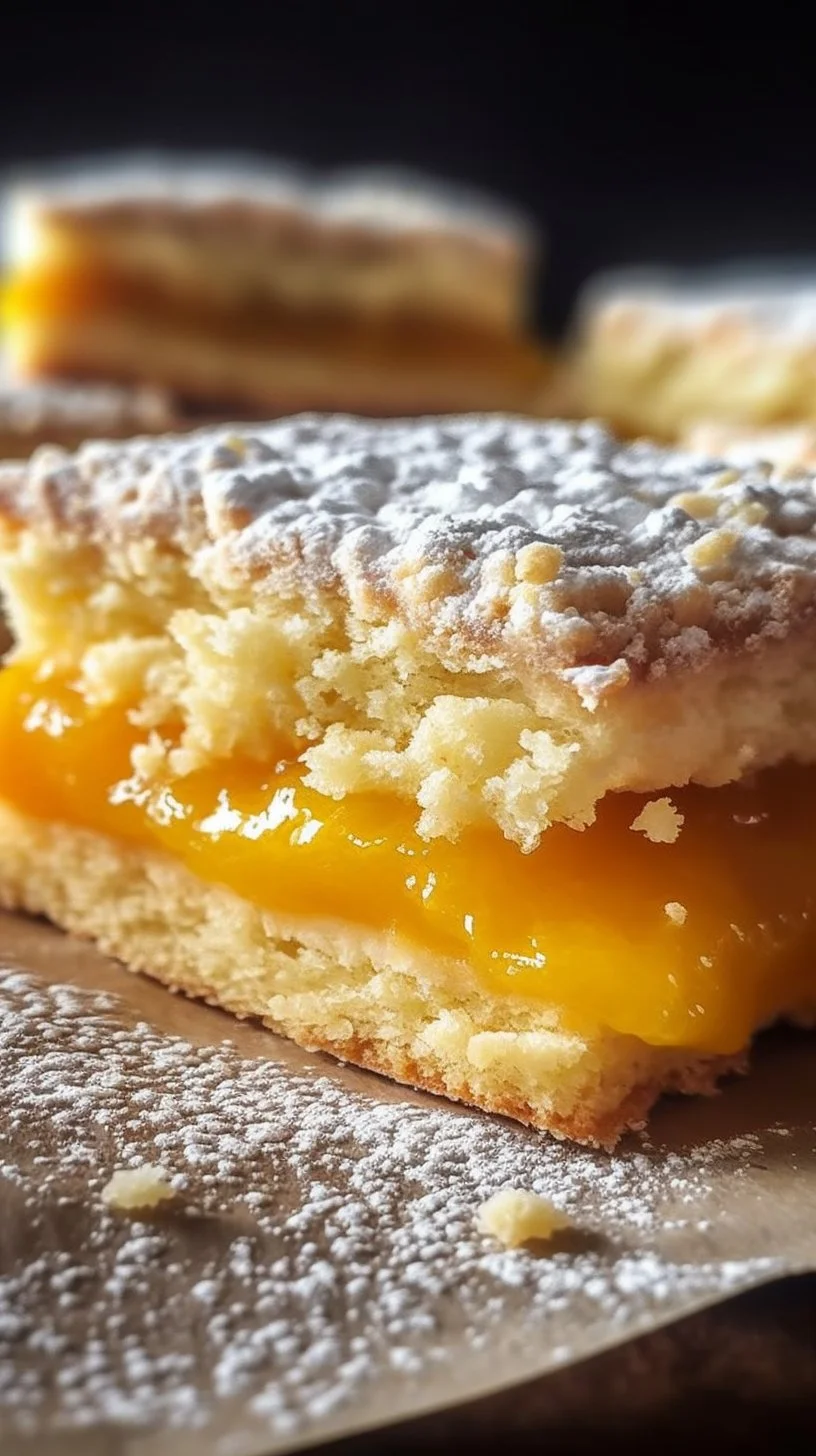
A strip of shortbread, warm from the oven, broken open to reveal a sunlit smear of apricot — a hush of caramelized fruit and butter that lingers like a memory.
The crumb is delicate and buttery; the filling, bright and fragrant with lemon and a ghost of almond.
These bars are small acts of patience that reward the senses.
Why make this recipe
A quiet, sophisticated bake for when you want something both familiar and refined. Apricot Shortbread Bars balance crisp, sandy pastry with a tender, jewel-toned fruit filling. They slice well, travel kindly, and carry the perfume of lemon and almond in every bite — perfect for teatime, picnics, or a simple, deliberate dessert.
How to make Apricot Shortbread Bars
Begin by coaxing the apricots to soften and sing. This recipe separates the joyful alchemy of a gentle fruit compote from the tactile, almost meditative work of working cold butter into flour. Press a portion of the dough to form a faithful, even base; scatter the apricot filling across its surface like sunlit confetti; then shave the remaining dough over the top into a tender crumble. A single golden bake melds the components into bars that are at once tender and crisp.
Ingredients:
- 3 cups all purpose flour
- 1 cup granulated sugar
- 1 teaspoon baking powder
- 1/2 teaspoon salt
- 1 1/2 cups unsalted butter, cold and cut into small cubes
- 1 large egg, lightly beaten
- 1 teaspoon vanilla extract
- 2 cups dried apricots, roughly chopped
- 1 1/2 cups water
- 1/2 cup granulated sugar, adjust to taste depending on apricot sweetness
- 2 tablespoons fresh lemon juice
- 1/4 teaspoon almond extract, optional
- Pinch of salt
How to make the apricot filling
- In a medium saucepan combine the chopped dried apricots, water, and the measured sugar.
- Bring to a gentle simmer over medium heat and let it cook, stirring occasionally, for 15–20 minutes or until the apricots are plump and very tender.
- Stir in the fresh lemon juice and the almond extract, if using. Season with a pinch of salt to lift the sweetness.
- Remove from heat and allow the mixture to cool completely — the filling will thicken as it cools.
How to make the shortbread base and topping
- Preheat the oven to 375°F (190°C). Grease and flour a 9×13 inch baking pan, or line it with parchment paper, leaving an overhang for easy removal.
- In a large bowl whisk together the flour, 1 cup granulated sugar, baking powder, and 1/2 teaspoon salt.
- Cut the cold butter into the dry ingredients using a pastry cutter, two knives, or your fingertips, until the mixture resembles coarse crumbs with some pea-sized pieces of butter remaining.
- In a separate bowl combine the lightly beaten egg and vanilla extract, then stir this into the flour-butter mixture until the dough just comes together.
- Reserve about 1 1/2 to 2 cups of the dough and set aside for the topping. Press the remaining dough firmly and evenly into the bottom of the prepared pan to form the base.
- Spread the cooled apricot filling over the pressed dough in an even layer. Crumble the reserved dough over the top, leaving bits of fruit exposed.
- Bake for 30–35 minutes, until the top is golden and the edges are fragrant and slightly crisp.
- Allow the pan to cool completely on a wire rack before cutting into bars so the filling has time to set.
How to serve Apricot Shortbread Bars
Serve at room temperature, allowing the shortbread to reveal its sandy texture and the filling its soft, concentrated sweetness. A dusting of powdered sugar feels lovely but is optional; pair with a cup of strong tea, a bright white wine, or simply a slow, mindful afternoon.
How to store Apricot Shortbread Bars
Keep bars in an airtight container at room temperature for up to 3 days. For longer storage, refrigerate for up to one week or freeze tightly wrapped for up to 3 months. If frozen, thaw at room temperature and let sit 30–60 minutes before serving so the shortbread regains some tenderness.
Tips to make Apricot Shortbread Bars
- Keep the butter cold and handle the dough sparingly; the contrast between cold butter and hot oven gives shortbread its tender, flaky quality.
- Cool the apricot filling completely before spreading — warm filling can make the base soggy.
- Press the base evenly with the back of a measuring cup for a consistent, compact foundation.
- If your dried apricots are very sweet, reduce the filling sugar to taste; the lemon brightens and balances sweetness beautifully.
- Use a serrated knife and a gentle sawing motion when slicing to keep edges clean.
Variations
- Swap the apricots for other dried stone fruits — peaches or nectarines work well — adjusting sugar and lemon to taste.
- Add a sprinkle of toasted chopped almonds or sliced pistachios on top before baking for crunch and color.
- For a glossier filling, stir a teaspoon of cornstarch into the cooled fruit mixture and simmer briefly before cooling; this will set the filling more firmly.
FAQs
Q: Can I use fresh apricots instead of dried?
A: Yes. Use about 3 cups chopped fresh apricots; reduce the added water to 1/4 cup and simmer until the fruit breaks down, adjusting sugar to taste. Fresh fruit will yield a juicier filling, so allow extra cooling time.
Q: My topping sank into the filling — what went wrong?
A: The filling was likely too warm when assembled. Always cool the fruit mixture completely before spreading, and press the base firmly so the topping has structure to rest upon.
Q: How do I make the bars less sweet?
A: Reduce the filling sugar to taste, and consider using unsalted butter and slightly less sugar in the dough; the lemon juice also helps balance sweetness.
Q: Can I make the dough in a food processor?
A: Yes. Pulse flour, sugar, baking powder, salt, and cold butter until the mixture resembles coarse crumbs, then pulse in the egg and vanilla until just combined. Avoid overprocessing.
Q: What’s the best way to cut clean squares?
A: Chill the fully cooled bars for 30 minutes, then use a sharp chef’s knife warmed under hot water and dried between cuts for cleaner edges.
Conclusion
These Apricot Shortbread Bars are a quiet celebration of texture and fruit — buttery crumbs holding a ribbon of golden apricot. For another perspective on apricot bars and crust techniques, see this thoughtful take on Apricot Bars with a Shortbread Crust, and for a similar, reliable recipe with useful tips, this version at Apricot Shortbread Bars Recipe – Dinner, then Dessert offers helpful variations.
Baking is a patient form of generosity; in the waiting, small miracles of flavor form.
Apricot Shortbread Bars
Ingredients
Method
- In a medium saucepan combine the chopped dried apricots, water, and measured sugar.
- Bring to a gentle simmer over medium heat and let cook, stirring occasionally, for 15–20 minutes or until the apricots are plump and very tender.
- Stir in the fresh lemon juice and almond extract (if using). Season with a pinch of salt. Remove from heat and allow to cool completely.
- Preheat the oven to 375°F (190°C). Grease and flour a 9x13 inch baking pan, or line it with parchment paper.
- In a large bowl, whisk together the flour, 1 cup granulated sugar, baking powder, and 1/2 teaspoon salt.
- Cut the cold butter into the dry ingredients until the mixture resembles coarse crumbs with some pea-sized pieces of butter remaining.
- In a separate bowl, combine the lightly beaten egg and vanilla extract, then stir this into the flour-butter mixture until the dough just comes together.
- Reserve about 1 1/2 to 2 cups of the dough for the topping and set aside. Press the remaining dough firmly into the bottom of the prepared pan.
- Spread the cooled apricot filling over the pressed dough and crumble the reserved dough over the top.
- Bake for 30–35 minutes, until the top is golden and the edges are fragrant and slightly crisp.
- Allow to cool completely on a wire rack before cutting into bars.